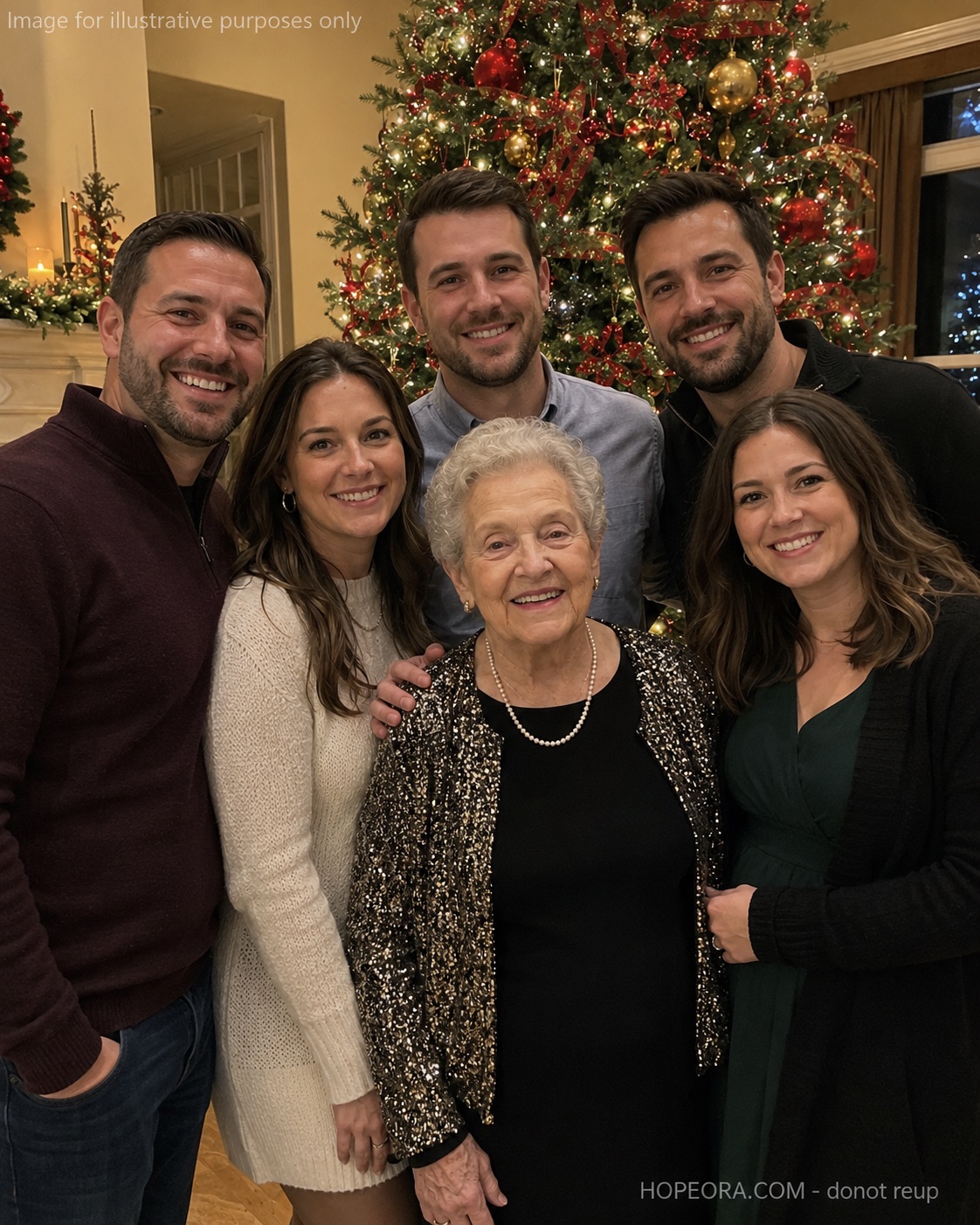
My Grandkids Only Visited at Christmas for the Money Until One Year Changed Everything
Some lessons take a lifetime to learn.
Mine arrived at eighty-seven years old, wrapped in Christmas paper, tucked inside ordinary envelopes, and revealed not by what people said—but by what they did.
For years, I believed I understood my family. I convinced myself that busy schedules, missed phone calls, and hurried holiday conversations were simply part of modern life. Young people had careers to build, children to raise, places to be, and responsibilities I could barely imagine. I never wanted to become the grandmother who demanded attention or made anyone feel guilty for living their own lives.
Instead, I told myself that love simply looked different than it had when I was raising my own children.
It wasn’t measured by long visits anymore. It wasn’t proven through handwritten letters or lazy Sunday afternoons spent talking over coffee. Love had become text messages, rushed holiday dinners, and promises that we’d “get together soon.”
At least, that’s what I kept telling myself.
Looking back now, I realize how easy it is to mistake hope for truth.
The older you get, the more carefully you protect the people you love from your own disappointments. You make excuses for them because the alternative is far more painful. You tell yourself they’re busy because believing they simply don’t make time for you hurts too much.
For years, that’s exactly what I did.
Until one Christmas finally showed me what I had refused to see.
A Life Built on Independence
I’ve always been fiercely independent.
Even as a little girl, I preferred figuring things out on my own instead of asking someone else to solve my problems. That part of me only grew stronger as I got older.
My husband used to tease me about it.
“You’d probably build your own house if someone left you alone with enough lumber,” he’d joke with a smile.
He wasn’t entirely wrong.
We built a comfortable life together through years of hard work, careful planning, and more than a little sacrifice. We weren’t wealthy by the standards of people who chased luxury, but we were secure. We learned early that financial freedom wasn’t about buying everything you wanted. It was about sleeping peacefully at night because you weren’t worried about tomorrow.
When my husband passed away, the silence inside the house felt enormous.
For a long time, every room reminded me of him.
His favorite chair sat untouched in the living room. I could almost hear the newspaper rustling whenever I walked past it. The kitchen still felt like the place where we’d shared quiet breakfasts before beginning another ordinary day together.
Grief has a strange way of changing shape over time.
At first, it crashes over you like waves.
Later, it settles into something quieter—a companion that never quite leaves but slowly becomes easier to live beside.
I never remarried.
Some people asked why.
The honest answer was simple.
I already had my great love story.
Nothing else needed to replace it.
Instead, I focused on creating a peaceful life for myself. I stayed in the home we had shared, tended my small garden, volunteered when I could, and managed my finances carefully. Years of saving, investing wisely, and living modestly had given me something I valued deeply.
Security.
I never wanted to become dependent on anyone.
More importantly, I never wanted my family to worry about me financially.
That independence also gave me another kind of freedom.
It allowed me to be generous.
There is something deeply satisfying about giving without expecting anything in return. Watching someone else’s face light up has always brought me far more joy than buying another sweater or replacing perfectly good furniture.
As my grandchildren grew older, I found myself looking forward to Christmas more than any other holiday.
Not because of the decorations.
Not because of the gifts beneath the tree.
Because Christmas meant the whole family would gather under one roof.
Or at least, that’s how it began.
A Christmas Tradition Everyone Expected
Over the years, one tradition quietly became part of every Christmas Eve.
After dinner, once the dishes were stacked in the sink and dessert plates had been pushed aside, I would reach for five envelopes resting beside my plate.
Each envelope contained the same amount.
Ten thousand dollars.
The first time I did it, my oldest grandchild was just starting college.
I remembered how overwhelming those early adult years could feel—tuition, rent, unexpected expenses, dreams that always seemed to cost a little more than expected.
I wanted to help.
Not because anyone asked.
Because I could.
The following year, I did it again.
Then it became tradition.
Eventually, none of my grandchildren remembered a Christmas without those envelopes waiting at the end of dinner.
I never made a speech about the money.
Never attached conditions.
Never asked where it went afterward.
It wasn’t payment.
At least, I never intended it to be.
To me, it was simply another way of saying, I love you. I hope this makes your life a little easier.
Every December, I planned the meal with the same care I always had.
I’d polish the silverware that had been in our family for decades.
The good china came down from the cabinet.
The dining room smelled of roasted turkey, cinnamon, fresh bread, and the pine tree standing proudly in the corner of the living room.
Christmas records played softly in the background while candles flickered across the table.
For a few precious hours, the house felt full again.
Laughter bounced off the walls.
Coats piled onto chairs.
The front hallway filled with boots, scarves, and wrapped presents.
It looked exactly like the family Christmases I’d always imagined growing old with.
But appearances can be wonderfully convincing.
Little by little, I began noticing things I hadn’t wanted to acknowledge.
The visits outside Christmas became fewer.
Phone calls grew shorter.
Birthdays were remembered through quick text messages instead of conversations.
Whenever I suggested lunch someday or invited someone over for coffee, the answer was almost always the same.
“Things are crazy right now.”
“Maybe next month.”
“Let’s definitely plan something.”
We never did.
Still, I defended them.
Young families are busy.
Careers demand everything.
Life moves faster now than it used to.
I repeated those explanations so often that I almost believed them myself.
Almost.
Then Christmas Eve arrived once again.
Just as it had every year, cars pulled into my driveway one after another.
The familiar sound of doors closing echoed through the cold evening air. Snow clung to coats and shoes as my five grandchildren stepped inside, bringing bursts of chilly December wind with them.
The house quickly filled with cheerful greetings, the smell of winter coats warming by the fireplace, and the familiar bustle of another family gathering.
For a little while, everything felt exactly as it always had.
But sometimes the smallest moments reveal the biggest truths.
And before the evening was over, I would begin noticing them one by one.
The Christmas That Changed Everything
Jake arrived first, as he often did.
At twenty-three, he carried himself with the effortless confidence that seems to belong exclusively to the young. He was handsome in a way that turned heads without him appearing to notice, though I suspected he noticed more than he let on. His dark hair was slightly messy, his expensive winter jacket unzipped despite the cold, and his phone seemed permanently attached to one hand.
He leaned over to kiss my cheek.
“Merry Christmas, Grandma.”
His lips barely brushed my skin before his attention drifted back to the glowing screen in his palm.
“I’ll just answer this real quick,” he said without waiting for a response.
I smiled anyway.
Young people live through those little screens now, I reminded myself.
It wasn’t personal.
At least, that was the explanation I offered before anyone else had even arrived.
Soon the front door opened again.
Christy hurried inside carrying enough bags, blankets, and baby supplies to stock a small nursery. One toddler rested sleepily against her shoulder while another clung to her hand, rubbing tired eyes.
“Oh my goodness,” she sighed dramatically. “Traveling with children should qualify as an Olympic sport.”
I laughed and helped take her coat.
“You made it. That’s all that matters.”
“I almost didn’t,” she admitted, pushing loose strands of hair behind one ear. “The twins skipped their naps, traffic was terrible, and honestly, I’m exhausted.”
She certainly looked it.
Dark circles framed her eyes, and although her sweater and tailored coat were expensive, they were wrinkled from the long drive. She loved her children fiercely—that much had never been in doubt—but somewhere beneath the fatigue, I sensed that being there already felt like another obligation squeezed into an overflowing schedule.
Before we finished talking, the doorbell rang again.
Carl stepped inside with the brisk efficiency of someone mentally keeping track of every minute.
He hugged me politely.
“Merry Christmas, Grandma.”
“You’ve been working too hard,” I said after noticing the tiredness around his eyes.
He chuckled.
“Comes with the job.”
As we settled into the living room, he explained—without much encouragement—that the law firm where he worked was preparing for an important case.
“The partner’s counting on me,” he said, straightening his cufflinks almost absentmindedly. “I’ve got documents waiting for me the second Christmas is over.”
“You should still enjoy your holiday.”
“I’ll try.”
But even as he answered, his wrist turned ever so slightly.
Another glance at his watch.
Another reminder that time elsewhere seemed more valuable than time here.
Mike arrived not long afterward.
He embraced me warmly enough, but within twenty minutes his phone vibrated.
“Sorry,” he muttered.
He stepped onto the porch.
When he returned several minutes later, he apologized again.
“Work thing.”
I nodded.
The explanation sounded reasonable.
Mechanics often dealt with emergencies.
Still…
Christmas Eve?
Not long afterward, the phone rang again.
Outside he went.
When he came back, his expression hadn’t changed.
“Everything okay?” I asked gently.
“Oh, yeah.”
A pause.
“Just work.”
Nothing more.
Finally, Julian arrived.
She swept into the house carrying a camera bag over one shoulder, cheeks flushed from the cold, smiling as she greeted everyone.
Unlike her cousins, she wasn’t married.
She’d spent much of her adult life traveling whenever work or opportunity allowed. Every Christmas she seemed to have visited another corner of the world.
She eagerly showed us photographs she’d taken during the year.
Snow-covered villages.
Busy marketplaces.
Sunsets over oceans.
Ancient streets filled with people speaking languages none of us understood.
The pictures were beautiful.
She spoke enthusiastically about each destination, her excitement contagious enough that even the twins watched quietly for a few minutes.
I admired every photograph.
Yet eventually I realized something.
She hadn’t asked how I’d been.
Not yet.
The realization wasn’t painful by itself.
It was simply another tiny observation quietly joining all the others.
One pebble doesn’t tip a scale.
Hundreds eventually do.
The Evening Everyone Waited For
Dinner unfolded exactly as Christmas dinner always had.
The turkey came out golden brown.
The mashed potatoes disappeared almost immediately.
The cranberry sauce—my husband’s favorite recipe—still earned compliments after all these years.
Christmas music floated softly through the dining room.
The children laughed.
Conversations overlapped.
Someone dropped a fork.
Someone else reached for another dinner roll.
Looking around the table, anyone passing the window would have seen a picture-perfect family celebration.
I wanted to believe that picture.
More than anything.
But by now I’d learned that photographs capture appearances, not attention.
As dessert plates replaced dinner dishes, I noticed something that had escaped me for years because I’d never truly looked for it before.
Eyes.
Not on me.
On the envelopes.
Five cream-colored envelopes rested neatly beside my dinner plate.
No one mentioned them.
No one pointed.
No one asked.
They didn’t have to.
Every few minutes someone’s gaze drifted toward them before quickly looking away again.
Jake looked twice.
Carl once.
Mike while pretending to refill his coffee.
Even Christy’s eyes lingered there between comforting one of the twins.
It wasn’t greed exactly.
It was expectation.
The envelopes had become as much a part of Christmas as the tree itself.
And that realization settled quietly inside me.
Not with anger.
Not even with disappointment.
Simply clarity.
That was the exact moment I knew my little experiment had to begin.
A Different Kind of Gift
I’d spent weeks thinking about it.
Wondering if I was being unfair.
Wondering if age had made me suspicious.
Wondering whether loneliness was clouding my judgment.
Several times I’d almost abandoned the idea entirely.
Then I remembered another unanswered phone call.
Another canceled lunch.
Another birthday marked by nothing more than a text message.
No.
I needed to know.
I picked up the first envelope.
“Merry Christmas, sweetheart.”
Jake accepted it with an easy smile.
Then another.
“And Merry Christmas to you.”
Christy thanked me warmly.
Carl accepted his.
Mike slipped his directly into his jacket pocket.
Julian smiled as she took hers.
For one brief second, the room grew unusually quiet.
Then Jake opened his first.
His eyebrows lifted.
He looked inside again.
Then again.
“Uh…”
He glanced toward me.
“Grandma… I think maybe somebody mixed these up?”
His tone was careful.
Confused.
Hopeful.
I folded my hands in my lap.
“I’m afraid there wasn’t any mistake.”
The room became even quieter.
“My savings aren’t what they used to be,” I said softly. “I’m simply not able to give what I used to.”
Jake stared at the fifty-dollar bill resting inside the envelope.
Across the table, Christy slowly pulled hers out.
“Oh.”
She forced a smile.
“That’s… that’s sweet of you.”
Carl cleared his throat.
“Well…”
He folded the envelope closed.
“Things are expensive for everybody these days.”
Almost immediately afterward, he looked down at his watch.
The gesture lasted only a second.
Maybe less.
Yet somehow it hurt more than any words could have.
Mike nodded once.
“Thanks, Grandma.”
He slipped the envelope into his pocket.
“Every little bit helps.”
His voice sounded polite.
Professional.
As though he were thanking a customer instead of family.
Julian turned her envelope over in her hands before opening it.
“Oh.”
She looked surprised.
Then smiled gently.
“Thank you.”
No complaint.
No visible frustration.
Just quiet acceptance.
Conversation eventually resumed.
People finished dessert.
Coffee cups emptied.
The twins became restless.
The evening carried on.
Outwardly, nothing dramatic had happened.
No arguments.
No accusations.
No raised voices.
If someone had walked through the dining room then, they would have believed it had been another perfectly pleasant Christmas gathering.
But beneath the surface, something fundamental had shifted.
I could feel it.
Not because anyone had reacted badly.
Because something invisible had been exposed.
The envelopes had changed.
And with them, perhaps everything else.
When the last dishes had been washed and the final hugs exchanged, I stood alone at the front door watching taillights disappear into the snowy darkness.
The house became quiet once again.
I looked at the empty driveway for a very long time before locking the door.
My experiment had only just begun.
Now all I could do was wait for next Christmas.
A Table Set for One Guest
The months between Christmases passed more quietly than I expected.
Winter slowly gave way to spring, and the bare branches outside my kitchen window filled with fresh green leaves. Summer brought warm evenings on the porch, where I often sat with a glass of iced tea, watching neighbors walk their dogs or children ride bicycles down the street. Autumn followed with crisp mornings and trees painted in brilliant shades of gold and crimson.
Life continued as it always had.
My garden needed tending.
The house needed cleaning.
The grocery shopping still had to be done every Thursday.
Outwardly, very little changed.
Inside, however, I found myself paying closer attention to the small things.
Who called without needing something.
Who remembered my birthday before Facebook reminded them.
Who asked how I was doing—and waited long enough to hear the answer.
I wasn’t keeping score anymore.
At least, I tried not to.
Still, after my little Christmas experiment, it became impossible not to notice the difference between obligation and affection.
By the time December arrived again, I already suspected how Christmas Eve might unfold.
Even so, I prepared the house exactly as I always had.
The tree stood in its familiar corner, decorated with ornaments collected over decades. Some had been made by tiny hands during elementary school art projects. Others had traveled home from family vacations long ago. Each one carried a memory, and hanging them on the branches felt like visiting old friends.
The dining table was set for six.
Five grandchildren.
One grandmother.
Hope, I had learned, is stubborn.
Even when experience tells us what to expect, hope quietly whispers that this year might be different.
As darkness settled outside on Christmas Eve, I glanced toward the driveway every few minutes.
Then the messages began.
The first arrived by text.
“Sorry, Grandma. Plans ran late. Love you!”
A few minutes later another notification appeared.
An animated Christmas tree danced across my screen before disappearing beneath a short apology explaining that family commitments had unexpectedly changed.
I smiled sadly.
Technology has made it easier than ever to stay in touch.
Sometimes it has also made it easier to stay away.
Then my computer chimed.
An email.
The subject line read:
Christmas Regrets.
I actually laughed.
Not because it was funny.
Because it sounded less like a message from a grandson and more like someone declining a business meeting.
I never opened it.
A voicemail followed shortly afterward.
I let it sit unheard.
Words mattered less than actions now.
Finally, after the house had grown almost painfully quiet, headlights swept across the front window.
A single car turned into the driveway.
I stood at the kitchen sink, drying a dinner plate that suddenly no longer needed drying.
For a brief moment, my eyes filled with tears.
Someone came.
Whether one person or five, someone had chosen to spend Christmas Eve with me.
That alone felt like a gift.
When the doorbell rang, I opened it to find Julian standing on the porch, a paper bag tucked beneath one arm and snowflakes resting on her coat.
She smiled.
“Am I early?”
She looked past me into the house.
“It doesn’t seem like anyone else is here yet.”
I stepped aside so she could come in.
“They couldn’t make it.”
She paused just long enough for understanding to settle across her face.
She knew.
Not because I explained it.
Because she remembered the previous Christmas.
“Oh,” she said quietly.
Then, almost immediately, she brightened.
“I guess that means I get you all to myself tonight.”
She smiled for my sake.
I could tell.
And somehow, that made the smile even more beautiful.
A Different Kind of Christmas
Dinner felt different that year.
Not because the table was nearly empty.
Because the conversation was finally full.
There were no constantly vibrating phones interrupting every few minutes.
No restless glances toward watches.
No distracted nods while someone mentally planned where they needed to be next.
Just two people sharing a meal.
Julian asked how I’d been.
Not casually.
Not as a polite conversation starter before changing the subject.
She genuinely wanted to know.
When I mentioned struggling to replace a stubborn light bulb, she laughed and promised to bring a taller ladder the next time she visited.
When I confessed that I’d accidentally set off the smoke alarm making toast a few weeks earlier, she laughed so hard she had to set her fork down.
“I wish I could’ve seen that.”
“You wouldn’t have been laughing while I was waving a dish towel under the detector.”
“Oh, yes, I would have.”
Before long, I was laughing too.
It occurred to me that I couldn’t remember the last Christmas dinner when I’d laughed that freely.
She still showed me photographs from her latest travels.
Pictures of mountain villages.
Bustling city streets.
Quiet beaches at sunrise.
But unlike previous years, the photos became part of a conversation instead of replacing one.
She asked about places I’d visited decades earlier with my husband.
She wanted to know which trips had meant the most to us.
She listened.
Really listened.
The hours slipped by unnoticed.
There were long pauses that felt comfortable rather than awkward.
Silence has a way of revealing genuine relationships.
When you’re with someone who truly enjoys your company, silence never feels empty.
After we finished dessert, I reached for the envelope waiting beside my plate.
This time there was only one.
I slid it gently across the table.
“Merry Christmas.”
She smiled.
“Thank you.”
Without opening it, she tucked it into her pocket.
I couldn’t help smiling.
“Go ahead.”
She looked puzzled.
“Open it.”
Slowly, she removed the envelope again.
She unfolded the check inside.
Her eyes widened.
“What is this?”
She looked back and forth between me and the amount printed across the paper.
“Grandma…”
“I don’t understand.”
I folded my hands together.
“I suppose it’s time I explained.”
The Lesson Money Could Never Buy
“I’ve been wondering something for a long time,” I began.
“I started noticing that Christmas seemed to be the only day I could count on seeing everyone.”
She remained perfectly still.
“So last year, I changed the envelopes.”
Recognition flashed across her face.
“The fifty dollars…”
I nodded.
“I wanted to know who would still come if there wasn’t ten thousand dollars waiting at the end of dinner.”
The words sounded harsher spoken aloud than they had inside my head.
“I know it wasn’t entirely fair,” I admitted.
“And perhaps it wasn’t very kind.”
“But I needed to know.”
She looked down at the check again.
“So…”
“You were testing us.”
“I was.”
She was quiet for several seconds.
Not angry.
Simply thinking.
“I guess I understand why.”
Then she held up the check again.
“But this…”
Inside the envelope was a check for fifty thousand dollars.
I’d prepared several possibilities.
If all five grandchildren had returned, I would have quietly resumed our old tradition.
If two or three had come, I intended to divide the money among those who chose to be there.
Only one person had arrived.
So every dollar belonged to Julian.
“You’re the only one who came,” I said softly.
“It’s yours.”
She stared at the check.
Then, without saying a word, she slipped it back into the envelope.
She reached across the table.
And pushed it gently back toward me.
I blinked.
“What are you doing?”
She smiled.
“The same thing you hoped someone would eventually do.”
“You don’t owe me anything.”
I opened my mouth to protest.
She gently shook her head.
“I didn’t come because I expected money.”
“I came because you’re my grandmother.”
“You don’t have to reward me for loving you.”
Those words settled into my heart with a quiet force I will never forget.
She wasn’t finished.
“Honestly,” she continued, “if this test proved anything, it’s that money complicated something that should’ve always been simple.”
She rested one hand over mine.
“Maybe there’s something better you could do with it.”
I looked at the envelope for a long moment.
Then back at her.
“I think you’re right.”
That night we carried my laptop into the living room and spent nearly two hours reading about charities.
One provided meals for older adults who couldn’t easily leave their homes.
Another helped children learn to read.
A third supported families receiving hospice care during life’s hardest moments.
Together, we divided the fifty thousand dollars equally among the three organizations.
As we clicked the final donation button, I felt unexpectedly peaceful.
For the first time in years, money no longer stood between me and the people I loved.
It had simply become another way to help someone.
Exactly as generosity should.
Reflection
Looking back now, I don’t believe the greatest gift that Christmas gave me was discovering which grandchild came through my front door.
It was realizing that love cannot be measured by what people accept from us.
For years, I confused generosity with connection. I believed that if I continued giving enough, our family traditions would stay intact and our relationships would naturally remain close. But affection built on expectation is fragile. The moment the expectation disappears, so does the appearance of closeness.
Real love behaves differently.
It makes time.
It remembers ordinary days, not just holidays.
It asks questions because it genuinely wants the answers.
It lingers after dinner simply because being together is enough.
Julian reminded me of something I should have known all along: genuine relationships never require a financial incentive. They are sustained by attention, kindness, and the quiet decision to keep showing up.
The money had never been the true gift.
Presence was.
Takeaway
After that Christmas, Julian visited often.
She came for Thanksgiving.
She stopped by on Easter.
Sometimes she appeared on an ordinary Wednesday afternoon with coffee in one hand and a story from her latest adventure in the other.
She didn’t come because there was an envelope waiting on the table.
She came because there was a chair waiting for her.
At eighty-seven years old, I finally learned a lesson that no amount of money could have taught me sooner.
Love isn’t something you can purchase, reward, or test into existence.
It reveals itself in quiet moments, steady presence, and simple acts of care.
The people who truly love you don’t show up for what’s inside the envelope.
They show up because you’re the one opening the door.