The phone call came on an ordinary afternoon, the kind that disappears into memory because nothing about it seems important—until everything changes.
One minute, I was standing over a set of structural drawings, arguing with a contractor about load-bearing walls. The next, I was gripping the edge of my desk while a police officer calmly explained that my mother had been involved in a serious car accident.
There are moments in life when time stretches so thin it almost breaks. You hear words, but they refuse to settle into meaning. You answer questions you barely understand. You stand, sit, drive, and somehow keep breathing even though your world has already stopped turning.
I don’t remember much about the drive to the hospital. I remember red traffic lights that seemed to last forever. I remember gripping the steering wheel until my fingers hurt. Mostly, I remember hoping—praying, really—that there had been some terrible mistake.
There hadn’t.
By sunset, my mother was gone.
She had been on her way to buy birthday candles.
Not medicine.
Not groceries.
Not anything urgent.
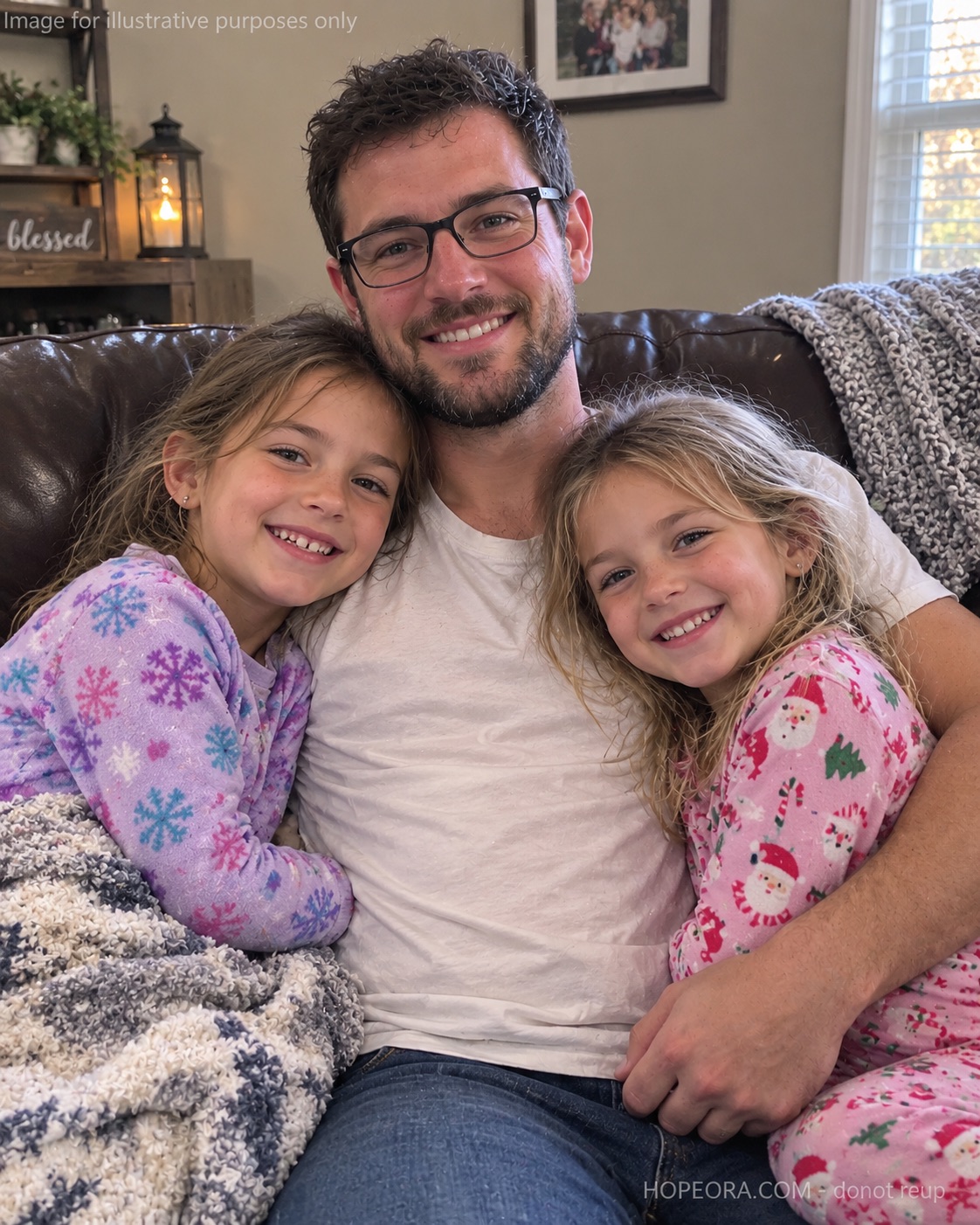
Just candles for my ten-year-old twin sisters, Lily and Maya, whose birthday party was supposed to be held that weekend.
Life has a cruel way of refusing to explain itself.
Six months earlier, I had been a twenty-five-year-old structural engineer whose biggest concerns revolved around project deadlines, mortgage payments, and planning a wedding.
My fiancée, Jenna, and I had almost everything figured out.
The venue had been reserved.
The honeymoon to Maui was already half paid for.
We debated colors for invitations with far more passion than either of us cared to admit. Jenna had already picked out baby names for children we hoped to have someday, laughing whenever I suggested something too old-fashioned.
Back then, my future looked comfortably predictable.
Busy, yes.
Stressful at times.
But predictable.
Even my mother’s constant stream of text messages had become part of that comfortable routine.
“James, did you remember breakfast?”
“I found another vitamin that helps with stress.”
“You’re working too much again.”
Whenever she visited, she always arrived carrying reusable grocery bags filled with fresh fruit, homemade soup, and enough healthy snacks to feed a family twice our size.
She never criticized me for working hard.
Instead, she worried that I wasn’t taking care of myself while I did it.
“You’re building everyone else’s future,” she’d say with a smile. “Don’t forget to build your own.”
I would laugh, kiss her cheek, and promise to get more sleep.
Neither of us realized how precious those ordinary conversations really were.
My mother, Naomi, had always been the center of our family.
After my father disappeared years earlier, she somehow managed to become two parents at once.
I was almost fifteen when she told us she was expecting twins.
She looked terrified.
Our father looked angry.
Within weeks, he packed a suitcase, walked out the front door, and never came back.
There wasn’t a dramatic goodbye.
No heartfelt explanation.
Just silence.
The kind that grows heavier with every birthday, every Christmas, every milestone he chose to miss.
Mom never spoke badly about him.
If anything, that made his absence hurt even more.
She simply worked harder.
She took extra shifts.
She learned how to stretch every dollar until it felt impossible that there could be any left at all.
Somehow, she still found time to attend school plays, soccer games, science fairs, and every little event that mattered to her children.
Looking back now, I honestly don’t know when she ever slept.
When Lily and Maya were born, I was old enough to help.
At first, I complained like any teenager would.
I changed diapers with dramatic sighs.
I pushed double strollers through grocery stores pretending not to notice strangers smiling at us.
I warmed bottles in the middle of the night while trying to finish algebra homework.
But somewhere along the way, those tiny girls stopped feeling like responsibilities.
They became my favorite people.
Lily had always been curious about growing things.
As soon as she could walk, she followed Mom into the backyard, fascinated by flowers, vegetables, and anything buried beneath the soil. Dirt permanently lived beneath her fingernails, and she wore it almost like a badge of honor.
Maya was different.
Quiet.
Gentle.
Always carrying a notebook.
She filled page after page with tiny stories, sketches, imaginary adventures, and observations about the world that somehow felt wiser than her years.
Mom encouraged both of them to become exactly who they already were.
She never compared them.
Never tried to make one more like the other.
She celebrated every difference.
After Dad disappeared, our little family became unusually close.
Maybe that’s what happens when the people who stay decide to love each other a little harder.
Even after I graduated from college and moved into my own apartment, Sunday dinners remained sacred.
Mom cooked far too much food.
The twins talked over each other until none of us could understand either one.
I usually ended up fixing something around the house—a leaky faucet, a broken cabinet door, a stubborn light fixture.
Those evenings felt permanent.
The kind of traditions you quietly assume will always exist.
Then one ordinary Tuesday erased all those assumptions.
The funeral passed in a blur of flowers, casseroles, sympathy cards, and conversations I barely remember.
Everyone kept asking if there was anything they could do.
The truth was, there wasn’t.
No meal could replace a mother.
No bouquet could answer the questions waiting for us after everyone went home.
Who would sign school permission slips?
Who would remember which twin hated mushrooms and which one refused to wear itchy sweaters?
Who would comfort two frightened little girls when they woke from nightmares calling for the only person who could no longer answer?
Our father certainly wasn’t coming back.
He hadn’t called.
He hadn’t written.
As far as the law—and reality—were concerned, the responsibility belonged to me.
I didn’t hesitate.
Not because I wasn’t afraid.
I was terrified.
I had never raised children.
I barely felt like an adult myself.
But Lily and Maya weren’t simply my sisters anymore.
They were depending on me for everything.
So that same night, I packed my apartment into boxes, loaded my car until I could barely see through the rearview mirror, and moved back into the house where I’d grown up.
I left behind carefully arranged bookshelves, expensive kitchen gadgets, and the quiet routines I’d spent years building.
None of it mattered anymore.
The twins needed someone to make breakfast.
Someone to help with homework.
Someone to remind them that brushing their teeth still mattered even when their hearts were broken.
Most of all, they needed someone who wasn’t leaving.
The first weeks were overwhelming.
Every room carried reminders of Mom.
Her favorite coffee mug still sat beside the sink.
Her gardening gloves hung neatly by the back door.
Half a grocery list remained attached to the refrigerator with a sunflower magnet, written in the familiar handwriting I’d recognize anywhere.
Some mornings I found myself standing in the kitchen, staring at that list for several minutes before realizing I hadn’t moved.
Grief has a strange way of making ordinary objects feel impossibly heavy.
The girls handled it differently.
Lily threw herself into caring for the small flower beds Mom had planted years earlier, watering them faithfully every afternoon as though keeping the flowers alive somehow kept a piece of their mother close.
Maya disappeared into her notebooks.
She wrote constantly.
Stories.
Poems.
Little observations.
Sometimes she’d quietly close a notebook whenever I entered the room, offering a shy smile that told me she wasn’t ready to share.
I never pushed.
Everyone mourns in their own language.
I was doing everything I could, but there were moments I felt completely unqualified for the life suddenly placed in my hands.
Then Jenna stepped in.
Just two weeks after the funeral, she arrived carrying several overnight bags and a gentle smile.
“You shouldn’t have to do this alone,” she told me softly.
“I love you, James.”
“And I already love those girls.”
At that moment, exhausted beyond words and desperate for hope, I believed her completely.
It felt like the first small light after weeks of darkness.
I had no idea how much I would come to depend on that light.
A New Routine Filled With Hope
For a while, it seemed as though life was slowly finding its balance again.
Jenna settled into the house with an ease that amazed me. She never complained about the extra laundry or the noisy mornings before school. Instead, she threw herself into every responsibility as though she’d been preparing for this role her entire life.
Every morning, she was already in the kitchen before anyone else.
The smell of pancakes or cinnamon oatmeal drifted through the hallway while Lily and Maya sleepily wandered downstairs. Lunch boxes were packed neatly on the counter, complete with handwritten notes tucked inside.
“Have a wonderful day!”
“You’ve got this!”
“Remember to smile!”
The girls adored those little notes.
Lily carefully folded hers into the pocket of her backpack before leaving for school. Maya slipped every single one into the back pages of her journal, saving them like treasured keepsakes.
Watching them laugh again felt like witnessing spring after an endless winter.
For the first time since Mom’s funeral, the house sounded alive.
Lily talked excitedly about the vegetables she wanted to plant once warmer weather arrived. She spent hours outside, kneeling beside the small garden bed their mother had built years before. She gently loosened the soil, pulled weeds, and proudly announced every tiny green sprout that pushed through the earth.
“It means they’re happy,” she said one afternoon.
“What does?”
“The flowers.”
She smiled without looking up.
“I think Mom would like that they’re still growing.”
I swallowed the lump in my throat and simply nodded.
“I think she would too.”
Maya found comfort somewhere quieter.
She continued filling notebook after notebook with stories only she understood completely. Sometimes I’d catch her sitting beside the living room window, watching the rain while her pencil moved steadily across the page.
She rarely spoke about what she wrote.
She didn’t need to.
Writing was where she carried the conversations she could no longer have with Mom.
Jenna often sat beside her, brushing loose strands of hair behind Maya’s ear.
“I can’t wait to read one someday,” she’d say warmly.
“When you’re ready.”
Maya would smile shyly.
“Maybe.”
Moments like those convinced me I’d made the right decision asking Jenna to share our lives.
Every evening we ate dinner together around the same table where Mom had served thousands of family meals.
Sometimes the girls laughed so hard milk came out of their noses.
Sometimes dinner was quiet because grief arrived unexpectedly, stealing everyone’s appetite without warning.
No one judged those evenings.
We simply sat together until the silence became bearable again.
Grief doesn’t disappear.
It simply learns to live beside love.
As weeks turned into months, routines slowly replaced chaos.
Homework came before television.
Pizza nights became Friday tradition.
Saturday mornings belonged to grocery shopping, followed by gardening if the weather cooperated.
Sunday evenings were reserved for homemade dinners and board games.
They weren’t exciting traditions.
They didn’t need to be.
Children rarely need spectacular moments.
They need consistency.
They need to know someone will still be there tomorrow morning.
That became my greatest goal.
Believing We Were Building a Family
Friends often commented on how incredible Jenna had been.
“I don’t know many people your age who would step into something like this,” one coworker told me.
“You found a keeper.”
I smiled because I believed exactly the same thing.
Even the girls seemed completely comfortable around her.
Maya listed Jenna as an emergency contact at school without anyone suggesting it.
When I noticed the form in her backpack, I felt tears prick my eyes.
“Are you sure?” I asked gently.
She shrugged with the innocent confidence only children possess.
“She already feels like family.”
Jenna happened to overhear.
She wrapped Maya in a hug so convincing it would have melted anyone’s heart.
“I always wanted little sisters,” she whispered, wiping away what looked like a tear.
“I promise I’ll always look after you.”
Standing there in the hallway, I thought my mother would have approved.
If she’d been watching somehow, I imagined she’d finally be able to rest knowing the girls were surrounded by people who loved them.
That belief carried me through countless difficult days.
Balancing a demanding engineering career with raising two grieving ten-year-olds wasn’t easy.
There were mornings I forgot to sign permission slips until we were halfway to school.
There were evenings I burned dinner because I answered work emails while pasta boiled over.
Some nights I fell asleep fully dressed on the living room couch while helping with math homework.
Whenever I apologized for not doing enough, Lily would quietly lean against my shoulder.
“We’re okay, James.”
Maya usually nodded.
“Mom always said families don’t have to be perfect.”
Those simple words carried me farther than they probably realized.
Still, I worried constantly.
Was I making the right decisions?
Was I too strict?
Not strict enough?
Would the girls eventually resent losing their childhood because their older brother suddenly became their guardian?
Those questions followed me everywhere.
The adoption process only added to the pressure.
Each appointment felt like another reminder that strangers were evaluating whether I deserved to raise the two people I loved most.
Paperwork piled across the dining room table.
Financial statements.
Medical records.
Home inspections.
Interviews.
Background checks.
Everything had to be documented.
Everything had to be explained.
Mrs. Patel, the social worker assigned to our case, was kind but thorough.
She visited regularly, asking careful questions about routines, discipline, school performance, and emotional well-being.
She always spoke directly to Lily and Maya.
“Do you feel safe here?”
“Does James listen when you’re upset?”
“Is there anything you’d like to change?”
The girls answered honestly.
They admitted they missed their mother every single day.
They admitted some nights were still hard.
But they also smiled when they talked about our little routines.
Pizza Fridays.
Garden afternoons.
Movie nights under oversized blankets.
Mrs. Patel often smiled while making notes.
When she left after one visit, Jenna wrapped her arms around me.
“We’re almost there.”
I kissed her forehead.
“I couldn’t have done any of this without you.”
She looked into my eyes.
“We’re a team.”
Those words stayed with me.
Or at least I thought they did.
Because while I was focused on becoming the best guardian I could be, something else had quietly begun growing beneath the surface.
Looking back now, the warning signs had always been there.
I simply didn’t recognize them.
There were small comments.
Tiny moments.
Easy to dismiss at the time.
Jenna occasionally sighed when the girls interrupted our conversations.
She rolled her eyes whenever another school meeting appeared on the calendar.
If Lily accidentally left gardening tools outside overnight, Jenna complained much longer than the mistake deserved.
When Maya forgot a library book at school, Jenna muttered under her breath about children being irresponsible.
Nothing was dramatic.
Nothing seemed cruel.
Everyone gets frustrated sometimes.
That’s what I told myself.
Besides, grief changes people.
I assumed we were all still adjusting.
I wanted so badly to believe we were moving toward a happy ending that I overlooked the little cracks beginning to spread beneath our feet.
Then came Tuesday.
It started like any other workday.
I spent the morning inspecting a construction site across town.
Dark clouds gathered overhead while I reviewed blueprints with the foreman, and by early afternoon the weather had turned cold and gray.
Rain threatened without ever fully arriving.
Something about the heavy sky reminded me of the day we buried Mom.
I finished earlier than expected and decided to surprise everyone by coming home before dinner.
Maybe we’d order takeout.
Maybe we’d watch a movie together.
The girls loved unexpected family nights.
As I pulled into the driveway, everything looked perfectly ordinary.
Maya’s bicycle lay on its side in the yard.
Lily’s muddy gardening gloves rested neatly on the porch railing, exactly where she always left them to dry.
The house looked peaceful.
Comfortable.
Safe.
I quietly unlocked the front door, hoping not to interrupt homework or afternoon naps.
The familiar scent of cinnamon and fresh-baked rolls drifted through the hallway.
For a brief moment, I smiled.
Home.
That’s what this place had become again.
Then I heard Jenna’s voice coming from the kitchen.
It wasn’t loud.
It wasn’t angry.
It was something far colder.
Sharp enough to stop me where I stood before I even realized why.
Every instinct told me not to make a sound.
He remained frozen in the hallway, one hand still resting on the doorknob.
His heart pounded so loudly he was certain someone would hear it.
Then Jenna spoke again.
“Girls, you’re not going to be staying here much longer, so don’t get too comfortable. James is doing what he can, but…”
Her voice trailed off with a dismissive laugh.
James felt every muscle in his body tighten.
For one impossible moment, he wondered if he had misunderstood. Maybe there was another explanation. Maybe she was talking about something else entirely.
Then came the words that erased every doubt.
“I’m not wasting the last years of my twenties raising someone else’s kids. A foster family would be much better for you anyway. They’ll know how to deal with all your sadness.”
Silence filled the room.
Then Maya’s small voice broke through.
“But… we want to stay with James.”
It wasn’t loud.
It was barely above a whisper.
It sounded frightened.
Fragile.
The kind of voice no child should ever have to use.
“You don’t get to decide,” Jenna replied coldly. “When the social worker comes for the final interview, you’re going to tell her you want another family.”
James felt sick.
He had spent months worrying whether he was doing enough for the girls.
Meanwhile, the woman he loved had been quietly trying to convince them to leave.
Then came another sentence that cut even deeper.
“If you cry again, Maya, I’ll throw away those little notebooks you care about so much.”
James instinctively clenched his fists.
He knew what those notebooks meant.
Every page carried pieces of a little girl trying to survive the greatest loss of her life.
Those journals weren’t simply stories.
They were where Maya still talked to her mother.
He heard quiet footsteps climbing the stairs.
A bedroom door closed.
The house fell silent.
James couldn’t move.
He wanted to storm into the kitchen.
He wanted to scream.
Instead, he stayed exactly where he was.
Something inside him needed certainty.
Moments later, Jenna’s voice changed completely.
Bright.
Cheerful.
Almost playful.
She was talking on the phone.
“They’re finally gone,” she laughed.
James slowly stepped closer without making a sound.
“I swear I’m exhausted pretending to be the perfect little mommy.”
A pause.
Then another laugh.
“Karen, once James adopts them, they’ll legally be his problem—not mine.”
James felt his stomach drop.
“So I need them gone before that happens.”
Another pause.
“The house should belong to us. The insurance money should be ours too. If I can get my name on the deed, everything works out.”
James stared at the wall in disbelief.
Every memory from the past six months suddenly looked different.
Every smile.
Every comforting hug.
Every lunch she packed.
Every bedtime story.
None of it had been real.
Karen must have said something because Jenna laughed again.
“I’ll make their lives miserable until James gives in. He’s so naïve he’ll think sending them away was his own idea.”
James closed his eyes.
Then came the sentence he would never forget.
“I’m not raising someone else’s leftovers.”
The words echoed through him like shattered glass.
Not children.
Not two little girls who had buried their mother.
Leftovers.
He quietly backed away, slipped outside, and closed the front door as gently as he had opened it.
Inside his car, he sat motionless.
Rain finally began falling against the windshield.
He didn’t start the engine.
He simply stared ahead while everything he believed about his future collapsed.
He thought about Lily carefully planting marigolds because their mother loved bright flowers.
He thought about Maya filling notebook after notebook with stories she was too shy to read aloud.
He remembered their bedtime ritual, whispering “Good night” to each other every evening before falling asleep.
Those girls had already lost enough.
He would never let anyone convince them they were unwanted again.
Not while he was alive.
There would be no dramatic confrontation.
No emotional argument.
No opportunity for excuses.
He already knew exactly what he had to do.
After driving around the neighborhood for twenty minutes, he stopped to buy two large pizzas.
When he walked through the front door, Jenna greeted him with her usual warm smile.
“There you are!”
She wrapped her arms around him and kissed him.
The familiar scent of coconut perfume suddenly made him feel ill.
“Everything okay?” she asked.
“Long day?”
James forced a tired smile.
“Just exhausted.”
Dinner passed quietly.
The girls talked about school.
Lily proudly described the tiny tomato seedlings beginning to grow in the backyard.
Maya quietly mentioned finishing another notebook.
James listened carefully to every word.
He wondered how many meals like this Jenna had spent pretending.
That night, after the twins were asleep, he found Jenna folding laundry in the living room.
He sat beside her and rubbed his forehead.
“You know…” he began slowly.
She looked up.
“Maybe you’ve been right.”
“About what?”
“The girls.”
Her expression remained carefully neutral.
“I don’t know if I can keep doing this.”
A flicker of excitement crossed her face before disappearing.
“Oh, James…”
She reached for his hand.
“I know this hasn’t been easy.”
“Maybe…” he continued, pretending to struggle with the words, “maybe another family could give them more than I can.”
Her entire posture relaxed.
“I’ve been trying to tell you that.”
She squeezed his hand gently.
“It isn’t fair to them either.”
James lowered his eyes.
“I think we should discuss it with Mrs. Patel next week.”
Jenna hugged him tightly.
“I’m proud of you.”
He hugged her back.
Over her shoulder, he saw Naomi’s framed photograph resting on the mantel.
His mother’s gentle smile seemed unchanged.
Silently, he made her a promise.
I’ll protect them.
No matter what.
Truth Comes Into the Light
The next several days became the hardest performance of James’s life.
He acted uncertain.
He appeared emotionally exhausted.
He allowed Jenna to believe she had finally won.
Meanwhile, every spare moment was spent gathering evidence.
Late one evening, while sorting through old paperwork in Naomi’s desk, he remembered something she had installed years earlier when the twins were toddlers.
Small nanny cameras.
Back then, she occasionally worked late shifts and hired babysitters.
The cameras had been connected to a cloud account using her email address.
James logged in.
To his surprise, the recordings were still there.
Hour after hour.
Day after day.
He watched with growing disbelief.
There was Jenna criticizing the girls whenever he wasn’t home.
Threatening Maya over her notebooks.
Rolling her eyes whenever Lily proudly showed her another flower blooming outside.
Complaining during phone calls.
Mocking James for believing she loved the children.
Talking openly about the house.
About the insurance money.
About getting rid of the girls.
Every recording confirmed what he had overheard.
There would be no denying it.
When the day of the final adoption interview finally arrived, Jenna greeted Mrs. Patel with homemade cookies and a welcoming smile.
She had dressed Lily and Maya in matching sweaters.
Everything looked picture-perfect.
The four of them sat together in the living room.
Mrs. Patel smiled kindly.
“I’ve been very encouraged by everything I’ve seen over these past months.”
James nodded politely.
“So have I.”
She turned toward the twins.
“Lily… Maya… how do you both feel about living here permanently?”
Before either child answered, James stood.
“Before they speak, Mrs. Patel, there’s something you need to hear.”
He connected his phone to the Bluetooth speaker sitting on the bookshelf.
Then he pressed play.
Jenna’s own voice filled the room.
“I’m not wasting the last years of my twenties raising someone else’s kids…”
“I’ll make their lives miserable…”
“I’m not raising someone else’s leftovers…”
Every word echoed through the silent house.
No one spoke.
Mrs. Patel slowly lowered the pen she had been holding.
Jenna’s face lost all color.
Finally James stopped the recording.
His voice remained remarkably calm.
“My mother installed nanny cameras years ago. I’d forgotten they were even there.”
He looked directly at Jenna.
“You weren’t pretending for me.”
“You were pretending for everyone.”
Jenna immediately stood.
“James, that’s completely out of context!”
“No.”
“It isn’t.”
“You threatened two grieving children.”
“You manipulated them.”
“You tried to convince them they weren’t wanted.”
“You wanted this house.”
“You wanted the insurance money.”
“And you planned to make them suffer until I gave them away.”
Tears streamed down Maya’s face.
Lily quietly reached over and held her sister’s hand.
Mrs. Patel’s expression hardened.
She turned toward Jenna.
“I believe it’s best if you leave immediately.”
Jenna protested.
She cried.
She apologized.
She insisted everyone had misunderstood.
No one believed her.
Within minutes, she packed a single suitcase under Mrs. Patel’s supervision.
She slammed the front door behind her with enough force to rattle every window in the house.
Then she was gone.
This time, for good.
A Home Built on Love
The silence that followed felt different.
Not empty.
Peaceful.
Mrs. Patel remained for another hour.
She spoke gently with the twins, reassuring them that none of this was their fault.
Then she turned to James.
“I’ve seen many difficult family situations,” she said quietly.
“But today I also saw something important.”
“You chose those girls the moment your mother died.”
“They know that.”
“And that’s what matters.”
A few weeks later, the adoption was finalized.
There was no elaborate celebration.
No expensive dinner.
Just the three of them stopping for ice cream on the drive home from the courthouse.
Lily insisted on planting another row of marigolds that afternoon.
“They’re for Mom,” she said.
“And for new beginnings.”
Maya smiled and handed James a small notebook.
“I wrote something.”
Inside, on the very first page, were simple words written in careful handwriting.
“Families aren’t the people who leave.”
“They’re the people who stay.”
James blinked away tears.
He closed the notebook and pulled both girls into a hug.
For the first time since Naomi’s death, the future no longer felt frightening.
It simply felt possible.
Reflection
Life rarely unfolds according to the plans we make.
James believed he was building a future with the woman he loved, only to discover that real character is revealed not by kind words but by quiet actions when no one is watching. Jenna’s deception was painful, but it also uncovered a deeper truth: love cannot be measured by appearances or promises. It is measured by sacrifice, consistency, and the willingness to stand beside someone when life becomes difficult.
Naomi spent years teaching her children that family meant showing up every day, even when it was hard. Without realizing it, James had learned that lesson well. The moment tragedy struck, he didn’t run from responsibility. He stepped toward it, frightened but determined, because the two little girls who depended on him mattered more than his own comfort.
In the end, the home Naomi built wasn’t held together by walls or memories. It endured because the love she poured into her children continued through them. James became the foundation his sisters needed, not because he was perfect, but because he never stopped choosing them.
Takeaway
Family isn’t defined by biology, convenience, or carefully spoken promises. It’s built through everyday acts of loyalty, compassion, and unwavering commitment. The people who truly love us don’t look for the easiest path—they stay, especially when life is at its hardest.
Sometimes losing the wrong person protects us from a lifetime of heartache. And sometimes the greatest inheritance a parent leaves behind isn’t money or a house, but the example of how to love others without conditions.
For James, Lily, and Maya, that lesson became the cornerstone of a new beginning—one built not on loss, but on the quiet strength of choosing one another every single day.