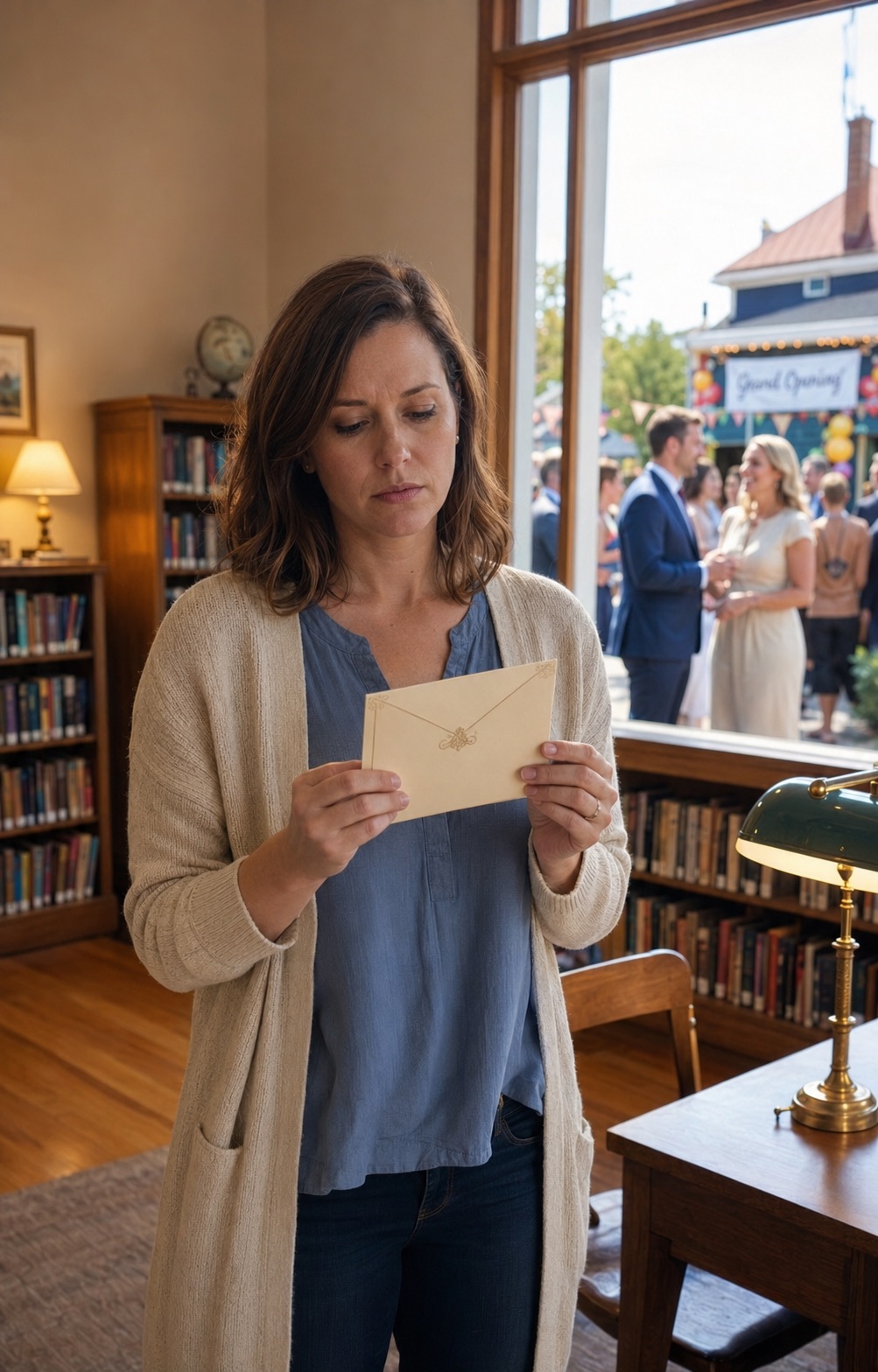
My name is Sarah Mitchell. I’m thirty-five years old, and until last spring, I honestly believed I’d been given a quiet little life that most people spend years hoping for.
I live in a small town outside Bozeman, Montana, where everyone seems to know your dog’s name before they know your last name. Around here, life moves a little slower. Folks wave from pickup trucks, the high school football schedule makes the front page of the local paper, and if you miss church on Sunday, somebody will ask on Monday if you’re feeling alright.
I never minded that kind of life.
In fact, I loved it.
For almost twelve years, I’ve worked at our county library. It’s not the kind of job that makes anyone rich, but it filled my days with stories, children’s laughter, and the quiet comfort of helping people find exactly what they needed. Some mornings I’d have retired veterans asking for books on American history. By lunchtime, I’d be helping a grandmother print pictures of her newest grandbaby. Every Wednesday afternoon, a group of elementary school kids would gather for story hour, and somehow they always believed I did the funniest voices.
Those little moments mattered to me.
My husband, Ethan, used to tease me that I cared more about overdue library books than our own electricity bill.
“One of these days,” he’d laugh while making coffee, “you’re going to forgive somebody for returning a book six months late.”
“I probably will,” I’d answer.
He’d kiss my forehead anyway.
Looking back now, it’s strange how clearly I remember the ordinary things.
The smell of cinnamon rolls after Sunday service.
The sound of rain tapping against our porch roof while Ethan watched baseball in his recliner.
The way he’d always leave the porch light on if I worked late because he knew I hated pulling into a dark driveway.
Those are the memories grief refuses to erase.
When we found out I was pregnant after nearly four years of trying, it felt as though the whole town celebrated with us.
Mrs. Dawson from church knitted a tiny blue blanket before she even knew whether we were having a boy or a girl.
Old Mr. Jenkins, who never smiled at anyone, handed me a carved wooden rocking horse he’d made in his garage.
Even the girls at the diner started bringing me decaf coffee before I had to ask.
People often say it takes a village to raise a child.
Back then, I believed we already had ours.
There was one other person who had been part of nearly every chapter of my life.
Rachel Brooks.
We met in second grade when she shared half her peanut butter sandwich because I’d forgotten my lunch. We stood beside each other at graduation, cried together after my mother passed away, and years later she stood beside me again as my maid of honor when Ethan and I got married.
If someone had asked me then who I’d trust with my life, Rachel’s name would’ve come just as quickly as Ethan’s.
She practically lived at our house.
She knew where we kept the spare key, fed our golden retriever whenever we were away, and never knocked before coming through the back door with a pie or a casserole.
People around town used to joke that we looked more like sisters than friends.
I always smiled when they said it.
I had no reason not to.
Looking back, I can remember tiny things that didn’t seem important then.
Rachel laughing a little too hard at Ethan’s jokes.
The two of them lingering on the porch after backyard cookouts while I cleaned dishes inside.
Text messages that Ethan would quickly swipe away whenever I walked into the room.
None of it felt like evidence.
It felt like ordinary life.
Maybe that’s the hardest part about betrayal.
It almost never announces itself.
It grows quietly while you’re busy believing you’re safe.
The afternoon everything changed started like every other Thursday.
I left the library a little early because my doctor wanted me to avoid standing too long. I stopped at Miller’s Market for fresh peaches, picked up Ethan’s favorite barbecue sauce, and spent the drive home thinking about baby names.
The nursery was nearly finished.
A tiny white crib sat beneath the window.
A rocking chair waited in the corner.
There was a half-painted wooden sign leaning against the wall with the words “Welcome Home, Little One.”
I remember smiling when I walked through the front door.
I remember calling out, “Honey, I’m home.”
No one answered.
A few minutes later, I heard Ethan’s truck pull into the driveway.
He came inside carrying none of his usual energy.
No smile.
No kiss.
No joke about dinner.
He simply stood in the kitchen doorway, staring at the floor with both hands shoved into his pockets.
My heart started racing before either of us spoke.
“I need to tell you something,” he said quietly.
I actually laughed.
I thought maybe another construction contract had fallen through, or maybe his brother needed to borrow money again.
Something we could solve together.
Instead, Ethan looked up at me with tears in his eyes and whispered six words that shattered everything I’d believed about my life.
“Rachel is carrying my baby.”
For a moment, I honestly thought I’d heard him wrong.
When Grief Has No Witness
I wish I could tell you I screamed.
Or threw something.
Or slapped him the way people do in movies.
I didn’t.
I just stood there holding a paper grocery bag while three peaches rolled across the kitchen floor.
One of them bumped against Ethan’s boot and stopped.
Neither of us moved.
“What did you say?” I finally whispered.
He swallowed hard.
“Rachel’s pregnant.”
I stared at him.
“My Rachel?”
He nodded.
The room suddenly felt too small. I could hear the refrigerator humming, the old clock over the stove ticking, a dog barking somewhere down the street. Every ordinary sound became painfully loud.
“I didn’t mean for this to happen,” he said.
I looked at him as if he were speaking another language.
“You didn’t… mean…”
The words wouldn’t come.
He rubbed both hands over his face.
“We didn’t plan it. It just… happened. We were helping each other through things, and somewhere along the way we fell in love.”
Fell in love.
People use those words as though they’re describing a gentle rainstorm.
As though love simply falls from the sky and lands wherever it wants.
I rested one hand on my stomach without thinking.
Our baby kicked.
Just once.
Strong enough that I felt it through my sweater.
It was the last peaceful moment I would ever have with that child.
Ethan took one cautious step toward me.
“I’ve already told Rachel I’m leaving.”
Leaving.
Such a small word for something that can level an entire life.
“I’ve spoken to a lawyer.”
Another sentence.
Another piece of the floor disappearing beneath my feet.
“I’ll make sure you’re taken care of financially,” he continued. “You’ll never have to worry about money.”
I finally looked him in the eyes.
“You think this is about money?”
He opened his mouth.
Nothing came out.
“You think our baby loses her father because you’ll write a check?”
His shoulders slumped.
“I’m sorry.”
It was amazing how two simple words could sound so empty.
After eleven years together…
After every birthday…
Every anniversary…
Every Christmas morning…
Every prayer we’d whispered asking God to bless us with a child…
The best he could offer was,
“I’m sorry.”
I don’t remember him leaving the house.
I remember sitting on the nursery floor hours later, leaning against the crib we’d spent two weekends putting together.
The little blue blanket Mrs. Dawson had knitted was folded neatly over the rail.
I held it against my face until I couldn’t breathe.
The next morning, half the town already knew.
Small towns have many blessings.
Privacy isn’t one of them.
Some people were kind.
Mrs. Alvarez from the bakery dropped off two casseroles without asking questions.
The mail carrier quietly squeezed my shoulder instead of making conversation.
But kindness was strangely outnumbered by curiosity.
People wanted details.
They wanted explanations.
They wanted someone to blame.
After church that Sunday, I heard my name whispered three pews behind me.
“I heard Rachel and Ethan had feelings for months.”
“Sarah must’ve ignored the signs.”
“I always thought they spent too much time together.”
Funny how everyone becomes an expert after the damage is already done.
The hardest conversation came two days later.
Pastor Daniel invited me into his office.
He’d baptized Ethan.
Married us.
Blessed our pregnancy only weeks before.
He folded his hands across his desk and sighed.
“Sarah,” he said gently, “this community is hurting.”
I nodded.
“So am I.”
“I know.”
He hesitated.
“I hope… in time… you’ll find forgiveness.”
I remember staring at the wooden cross hanging behind him.
“I haven’t even found yesterday yet,” I answered.
“Please don’t ask me to find forgiveness.”
He looked genuinely saddened.
“I only meant—”
“I know what you meant.”
I stood before I started crying.
Outside the church, I sat in my car for nearly an hour before turning the key.
Everyone wanted me to heal.
No one seemed interested in acknowledging what had actually been broken.
Rachel sent one message.
Just one.
I’m sorry things happened this way.
Things.
As though our marriage had been canceled because of bad weather.
I never replied.
About three weeks later, I woke before dawn with a sharp pain across my lower back.
At first I thought I’d slept wrong.
Then I noticed the blood.
The emergency room was only fifteen minutes away.
It felt like an entire lifetime.
I kept telling myself everything would be alright.
Babies are strong.
Doctors know what they’re doing.
Miracles happen every day.
I repeated those thoughts until I almost believed them.
The nurse held my hand while another doctor quietly called for more tests.
No one looked me in the eye.
That’s when I knew.
Hours later, Dr. Morrison pulled a chair beside my bed.
He didn’t rush.
He didn’t hide behind medical language.
“I’m so sorry,” he said softly.
“We couldn’t save your baby.”
There are moments in life that divide everything into two parts.
Before.
And after.
That sentence became mine.
I remember signing papers I couldn’t read.
Walking through hospital hallways that suddenly seemed endless.
Carrying home an overnight bag that still contained the tiny pair of baby socks I’d packed “just in case.”
The nursery stayed exactly as we’d left it.
The crib.
The rocking chair.
The welcome sign.
Everything waited for a child who would never come home.
Ethan never came to the hospital.
Not once.
He sent flowers.
White lilies.
No note.
I asked the nurse to give them away.
A week later I returned to the library.
Not because I was ready.
Because sitting alone inside that silent house hurt even more.
Children still came for story hour.
Retired couples still checked out mystery novels.
Life kept moving with an almost cruel determination.
One afternoon, little Emma Collins, who couldn’t have been more than six years old, handed me a drawing she’d colored with bright crayons.
It showed a woman standing beneath a rainbow beside a little girl with wings.
“I made it for you,” she whispered.
“My grandma said your baby lives with Jesus now.”
I thanked her before stepping into the storage room.
I cried harder over that drawing than I had over the flowers.
Because children tell the truth adults are too uncomfortable to speak aloud.
By the end of summer, I’d stopped expecting justice.
I’d stopped expecting apologies.
I only hoped the memories would someday hurt a little less.
Then, almost a year after my whole world collapsed, colorful invitations began appearing in mailboxes all over town.
Not for a wedding.
For the grand opening of The Brooks Family Community Center—a charity project Rachel and Ethan proudly called their new beginning.
Mine never arrived.
I wasn’t surprised.
But three nights before the ceremony, my phone rang.
The caller ID read:
Pastor Daniel.
His voice sounded different than I had ever heard it before.
Quiet.
Heavy.
Almost… uneasy.
“Sarah,” he said, “I know this may sound strange…”
He paused for several long seconds.
“…but I think you should come on Saturday.”
I frowned.
“Why?”
There was another silence.
Then he answered with words that made my heart begin pounding all over again.
“Because I don’t believe that building is going to open the way Ethan thinks it will.”
The Day the Masks Began to Slip
Pastor Daniel’s words stayed with me for the next three days.
“I don’t believe that building is going to open the way Ethan thinks it will.”
I replayed them while shelving books at the library, while watering the tomato plants in my backyard, even while lying awake at night listening to the wind push against my bedroom window.
I almost called him back twice.
Both times, I hung up before the call connected.
If I’d learned anything over the past year, it was that asking too many questions usually led to answers I wasn’t ready to hear.
Saturday morning arrived warm and unusually bright.
The kind of Montana summer day that made the mountains look close enough to touch.
By ten o’clock, nearly the entire town seemed to be headed toward the new community center.
People parked along both sides of Main Street.
Children carried red, white, and blue balloons.
A local bluegrass band tuned their instruments near the entrance while volunteers arranged trays of homemade cookies inside.
It looked less like a business opening and more like a town celebration.
Exactly the kind of event Ethan always loved.
He enjoyed being admired.
I wasn’t planning to go.
Even after Pastor Daniel called.
I told myself there was no reason to reopen wounds that had finally begun to scar over.
Instead, I spent the morning organizing donated books in the library basement.
Around eleven, my coworker, Nancy, walked downstairs carrying two cups of coffee.
She was sixty-eight, had worked at the library longer than anyone else, and possessed the rare ability to know when someone needed company without asking.
She handed me a cup.
“You’ve been awfully quiet today.”
“I’ve had quieter years,” I joked.
She smiled sadly.
“They’re all at the ribbon-cutting.”
“I know.”
“You going?”
I shook my head.
“I don’t belong there.”
Nancy looked at me for a long moment before speaking again.
“You know,” she said, “when my first husband left me, I spent five years avoiding every place I thought I might run into him.”
I glanced up.
“What changed?”
“I got tired of letting someone else’s choices decide where I was allowed to exist.”
Her words settled somewhere deep inside me.
She squeezed my shoulder before heading back upstairs.
“You belong anywhere your conscience is clean.”
An hour later, I found myself sitting in my truck.
The engine idled outside the library.
I still wasn’t sure where I was going.
Eventually, almost without deciding, I turned toward Main Street.
The closer I got, the heavier my chest felt.
Old memories have a strange way of attaching themselves to familiar roads.
The community center stood at the edge of town, built inside what had once been an abandoned grain warehouse.
It was beautiful.
Fresh white paint.
New flower beds.
An American flag fluttering above the entrance.
A large wooden sign read:
BROOKS FAMILY COMMUNITY CENTER
“Building Hope Together.”
The words made me look away.
Hope.
That had once been my favorite word.
I parked several blocks away.
Not because there wasn’t space.
Because I didn’t want everyone watching me arrive.
As I walked toward the building, conversations seemed to soften.
Not stop.
Just soften.
People nodded politely.
Some smiled.
Others looked uncomfortable.
I recognized nearly every face.
Teachers.
Farmers.
Retired firefighters.
Families I’d helped during library fundraisers.
No one said anything cruel.
But I could still feel the invisible line between being welcomed…
and merely being tolerated.
Inside, volunteers hurried between tables arranging food.
Children chased one another across the polished floor.
Local reporters adjusted cameras near a small stage where a blue ribbon stretched across the entrance.
Everything appeared perfect.
Too perfect.
Then I noticed Pastor Daniel.
He wasn’t greeting guests.
He wasn’t smiling.
He stood alone near the back wall speaking quietly with Linda Foster.
That caught my attention immediately.
Everyone knew Linda.
She had spent nearly thirty years managing the books for Mitchell Construction—Ethan’s family company before he branched out on his own.
If there was anyone in town who understood paperwork, finances, and the history of that business…
It was Linda.
She looked unusually pale.
She clutched a thick manila folder against her chest as though she were afraid someone might take it.
Pastor Daniel glanced across the room.
When he saw me, he gave the smallest nod.
Not a smile.
Just a nod.
As if to say,
“Thank you for coming.”
I started walking toward him.
Before I reached them, Ethan stepped onto the stage.
The room erupted in applause.
He looked exactly the way everyone expected him to.
Tailored navy suit.
Confident smile.
Perfect hair.
Rachel stood beside him in a cream-colored dress, holding their little boy on one hip.
The crowd adored them.
For just a moment, I wondered if Pastor Daniel had been mistaken.
Maybe there wasn’t going to be any surprise.
Maybe this really was just another happy ending.
Ethan thanked the volunteers.
He thanked the donors.
He thanked the town for believing in second chances.
That phrase made several people clap even harder.
“Second chances.”
I lowered my eyes.
Some second chances seemed to come much easier than others.
Rachel leaned toward the microphone next.
“I know our journey hasn’t always been easy,” she said, smiling through tears.
“But today proves that God can bring beautiful things from broken beginnings.”
The audience applauded again.
Only this time…
I noticed something strange.
Linda Foster didn’t clap.
Neither did Pastor Daniel.
Nor did three members of the church board standing along the side wall.
They simply watched.
Silent.
Their expressions unreadable.
A cold feeling settled into my stomach.
Then I noticed someone else.
An unfamiliar woman had quietly entered through the back doors.
She looked to be in her early sixties.
Silver hair pulled neatly into a bun.
A worn leather briefcase hung from one shoulder.
She didn’t greet anyone.
Didn’t take a seat.
She simply stood near the entrance, scanning the room until her eyes landed on Ethan.
The color drained from her face.
At almost the exact same moment…
Ethan saw her.
For the first time since I’d known him…
His smile disappeared.
It wasn’t subtle.
It vanished completely.
He froze in the middle of his sentence.
Rachel looked up at him, confused.
“You okay?” she whispered, forgetting the microphone was still live.
He forced a laugh.
“Yeah… just thought I recognized someone.”
But he hadn’t merely recognized someone.
I’d spent eleven years married to that man.
I knew the difference between surprise…
and fear.
This…
was fear.
Linda tightened her grip on the folder.
Pastor Daniel quietly stepped away from the wall.
The silver-haired woman began walking slowly toward the front of the room.
No one else seemed to understand what was happening.
But suddenly…
I did.
Pastor Daniel hadn’t invited me there to watch Ethan celebrate.
He had invited me…
to witness the moment the truth finally caught up with him.
When the Truth Walked Through the Front Door
The room was still.
Not silent—children were whispering somewhere near the refreshment table, and the air conditioner hummed overhead—but there was a strange tension that seemed to settle over every conversation at once.
Ethan tried to recover.
He laughed into the microphone.
“Sorry about that,” he said. “I think we’re all a little nervous today.”
A few people chuckled politely.
Rachel smiled, though I could see uncertainty creeping into her face.
The silver-haired woman continued walking toward the stage.
She wasn’t angry.
She wasn’t shouting.
She moved with the calm determination of someone who had spent a long time deciding exactly what she needed to do.
When she reached the front row, Pastor Daniel stepped beside her.
“Ladies and gentlemen,” he said, taking the microphone from Ethan before he could object, “before we cut this ribbon, there are a few things that need to be addressed.”
The applause stopped instantly.
Ethan forced a smile.
“Pastor, this probably isn’t the right—”
“It is exactly the right time.”
His voice wasn’t loud.
It didn’t need to be.
The entire room turned toward him.
Rachel looked from Pastor Daniel to Ethan.
“What’s going on?”
No one answered.
Pastor Daniel looked toward Linda Foster.
“Linda.”
Linda slowly walked onto the stage, still holding the thick manila folder against her chest.
I had known Linda for years.
I’d never seen her hands shake before.
She adjusted her glasses and looked directly at Ethan.
“I’ve worked with your family’s businesses for twenty-eight years,” she began.
“I watched your father build a company people trusted.”
She paused.
“And I watched you destroy that trust.”
A murmur spread through the audience.
Ethan stepped forward.
“This is ridiculous.”
Linda ignored him.
“For nearly two years, I’ve kept records of money that disappeared from charitable donations.”
Another murmur.
“Donations intended for this community center.”
She opened the folder.
Inside were copies of bank statements.
Invoices.
Canceled checks.
Signed contracts.
Everything neatly organized.
“I brought these to your board of directors six months ago.”
Several people in the audience exchanged confused looks.
Rachel frowned.
“What is she talking about?”
Linda continued.
“Those records were turned over to law enforcement three weeks ago.”
The room seemed to stop breathing.
Ethan laughed again.
Only this time the sound was strained.
“You can’t seriously believe this.”
“I don’t have to believe it,” Linda replied quietly.
“I balanced the books.”
Rachel looked at Ethan.
“Tell me she’s wrong.”
He didn’t answer.
Instead, he reached for the folder.
Linda calmly stepped backward.
“Don’t.”
The sheriff, who had been standing quietly near the entrance all morning, finally walked forward.
I hadn’t even noticed he was there.
Neither had anyone else.
Until now.
He stopped beside the stage.
“Ethan Brooks,” he said evenly, “I’d suggest you let Mrs. Foster finish.”
A ripple of shock moved through the crowd.
Rachel’s face had gone completely pale.
She grabbed Ethan’s arm.
“What’s happening?”
Still…
No answer.
Then Pastor Daniel turned toward the silver-haired woman.
“Would you introduce yourself?”
She nodded once.
“My name is Margaret Hale.”
Her voice was soft.
Steady.
“I live in Spokane now.”
She looked directly at Ethan.
“But twenty-two years ago…”
“…I was married to him.”
The room exploded with whispers.
Rachel actually took a step backward.
“What?”
Margaret never raised her voice.
“We were married for eight years.”
She reached into her briefcase and removed a worn photograph.
A younger Ethan stood beside her, smiling in front of a courthouse.
She handed the picture to Pastor Daniel.
He held it up for everyone to see.
Several gasps echoed across the room.
Margaret continued.
“When Ethan left, he also left behind nearly one hundred thousand dollars in unpaid debts.”
She glanced toward Rachel.
“And another woman who believed she was the only one.”
Rachel stared at Ethan.
“You told me you had never been married.”
“I—”
“You looked me in the eyes…”
“…and told me I was the first woman you’d ever wanted to build a life with.”
Tears filled her eyes.
The little boy in her arms began crying.
She barely noticed.
Margaret wasn’t finished.
“I didn’t come here because I hate him.”
She looked around the room.
“I came because I received a phone call from Linda.”
Linda nodded.
“She asked whether I was willing to tell the truth.”
Margaret smiled sadly.
“I spent twenty years wishing someone had warned me.”
The silence that followed was heavier than any shouting could have been.
Then Linda spoke again.
“There is one more thing.”
She removed another document from the folder.
“This community center wasn’t financed the way everyone was told.”
She slowly looked around the room.
“The construction was paid for using donations collected after last year’s flood relief fundraiser.”
Several people gasped.
I recognized many of those names.
Retired couples.
Church members living on fixed incomes.
Families who had given because they believed they were helping neighbors rebuild.
One elderly veteran lowered his head into his hands.
“My wife baked pies for that fundraiser,” he whispered.
Another woman quietly began crying.
Rachel looked as though she couldn’t breathe.
She turned toward Ethan one final time.
“Please.”
Her voice cracked.
“Tell me one thing…”
“…just one…”
“…that wasn’t a lie.”
He opened his mouth.
Nothing came out.
Not one word.
Because there wasn’t one.
The sheriff stepped onto the stage.
“Ethan Brooks.”
He removed a folded document from his jacket.
“You are being served pending charges involving fraud, financial misrepresentation, and misuse of charitable funds.”
No handcuffs.
No dramatic struggle.
Just paperwork.
Reality.
Consequences.
Ethan looked around the room, searching desperately for someone to defend him.
No one moved.
Not a single person.
The admiration he’d spent years building disappeared in less than five minutes.
Rachel slowly slipped her engagement ring from her finger.
Her hands trembled so badly she nearly dropped it.
She placed it on the podium between them.
“I stole someone else’s future…”
she whispered through tears.
“…and all I really stole…”
“…was a lie.”
She picked up her son.
Without another word…
she walked past Ethan.
Past me.
Past everyone.
The crowd quietly made room for her.
No one tried to stop her.
As she reached the doorway, she hesitated.
She turned toward me.
For a long moment neither of us spoke.
Then, with tears streaming down her face, she mouthed two words.
“I’m sorry.”
I didn’t nod.
I didn’t shake my head.
I simply looked at her.
Because for the first time in over a year…
I realized something unexpected.
Watching Ethan lose everything didn’t make me feel victorious.
It made me feel…
finished.
Like a chapter I’d carried far too long had finally reached its last page.
Pastor Daniel quietly laid a hand on my shoulder.
“You can go home now,” he said softly.
“You’ve carried enough.”
As I turned toward the exit, I heard the ribbon-cutting ceremony being canceled behind me.
No applause.
No speeches.
Only the sound of people beginning, one conversation at a time, to tell the truth.
The Life I Thought I’d Lost
People in small towns like ours have long memories.
For weeks after the ribbon-cutting was canceled, no one talked about anything else. The grocery store checkout lines were quieter than usual. The coffee shop buzzed with whispered conversations. Sunday after church, people gathered in little circles on the front lawn—not to gossip this time, but to make sense of how someone they had trusted could have hidden so much for so long.
The investigation moved quickly.
Everything Linda had documented turned out to be true.
More records surfaced.
More witnesses came forward.
Families who had donated to the community center learned exactly where their money had gone, and several local contractors admitted they’d been pressured into staying quiet because they didn’t want to embarrass the town.
It wasn’t just one lie.
It had been an entire life built on them.
Ethan eventually accepted a plea agreement and was ordered to repay a substantial portion of the stolen charitable funds. He also lost his contractor’s license, and the business he’d spent years building closed its doors for good.
Strangely enough, none of that brought me the satisfaction I once imagined justice would.
A year earlier, I probably would have celebrated.
Now…
I mostly felt tired.
Not because I pitied him.
Because hatred had become too heavy to carry.
A few weeks later, I was shelving books when someone quietly walked into the library.
I looked up.
Rachel.
She looked different.
Not because she’d changed her hair or lost weight.
She simply looked… humbled.
There was no expensive handbag on her shoulder.
No carefully practiced smile.
Only a diaper bag and a little boy holding tightly to her hand.
She stopped several feet away.
“I wasn’t sure you’d want to see me.”
“I wasn’t sure either,” I admitted.
For a moment, neither of us spoke.
Her little boy wandered toward the children’s section, fascinated by a shelf of picture books.
Rachel watched him before looking back at me.
“I’ve replayed the last two years in my head every single day,” she said quietly.
“I kept telling myself we fell in love.”
She swallowed.
“But love doesn’t ask someone else to carry all the pain.”
I didn’t interrupt.
“I wanted what you had,” she continued. “I convinced myself that if Ethan chose me… it meant I was special.”
She laughed once.
It wasn’t a happy laugh.
“It turns out I wasn’t chosen.”
“I was simply next.”
Tears rolled down her face.
“I’m not asking you to forgive me.”
She shook her head.
“I don’t think I’ve earned that.”
“I just needed you to know…”
“I’m sorry.”
A year ago, I would’ve wanted that apology more than anything.
Standing there…
I realized I no longer needed it.
“I appreciate you saying it,” I told her.
“And I hope your son grows up surrounded by people who teach him what honesty looks like.”
She nodded through tears.
“So do I.”
She left a few minutes later.
Neither of us hugged.
Neither of us pretended everything was alright.
Some things can’t be repaired.
But they can stop bleeding.
That was enough.
Life slowly became ordinary again.
And I learned something surprising.
Ordinary isn’t boring.
Ordinary is a blessing.
Wednesday story hour returned to being my favorite part of the week.
Mr. Jenkins still argued about Civil War history every Friday afternoon.
Mrs. Dawson continued knitting blankets for every baby born in town.
The seasons kept changing.
Without asking anyone’s permission.
One October morning, Nancy convinced me to visit the county animal shelter.
“I’m not ready for another responsibility,” I insisted.
“We’re just looking,” she smiled.
Anyone who’s ever come home with a dog knows those are dangerous words.
In the last kennel sat an older golden retriever with cloudy eyes and a gray muzzle.
His tag read:
Walter — 10 years old.
The volunteer explained that his owner had recently passed away.
Since then, Walter had barely eaten.
He spent most days quietly watching the shelter door.
Waiting for someone who wasn’t coming back.
When I knelt beside the kennel, he slowly walked over and rested his head against my hand.
Neither of us moved.
Nancy smiled.
“I think he just picked you.”
Walter came home with me that afternoon.
For weeks, he slept beside the rocking chair that still sat in the nursery.
The same rocking chair I’d never had the chance to use.
One evening, I caught myself smiling as he snored loud enough to rattle the floorboards.
It was the first completely unforced smile I’d had in longer than I could remember.
Not because life had returned to what it was.
But because it had become something new.
Something peaceful.
The following spring, the town council voted unanimously to reopen the unfinished community center.
Only this time, it would truly belong to the community.
Local volunteers finished the construction.
Carpenters donated weekends.
Retired electricians offered free labor.
Church groups prepared meals for the workers.
Even high school students painted classrooms after school.
When the building finally opened, it wasn’t named after a family.
It was called:
The Hope Community Center.
On opening day, Pastor Daniel asked if I’d cut the ribbon.
I laughed.
“There are people far more deserving.”
He smiled gently.
“Sometimes the person who endured the deepest wound is the one who reminds everyone why healing matters.”
I hesitated.
Then I accepted.
As I stood in front of hundreds of neighbors, I looked across the crowd.
I saw Linda.
Nancy.
Mrs. Dawson.
Mr. Jenkins.
Families from story hour.
Children running across the lawn.
Rachel stood quietly near the back with her little boy.
She didn’t wave.
She simply smiled.
A grateful, respectful smile.
And somehow…
That felt right.
I picked up the scissors.
For just a moment, I thought about everything that had happened.
The nursery.
The hospital.
The loneliness.
The anger.
The questions that had kept me awake.
Then I thought about all the things I’d found afterward.
Grace.
Friendship.
Purpose.
Peace.
I cut the ribbon.
The crowd applauded.
Not for me.
For what we had rebuilt together.
People sometimes ask whether I still think about Ethan.
The truth is…
Not very often.
Pain has a strange way of shrinking once you stop feeding it.
I still miss the little girl I never got to hold.
I think I always will.
Love doesn’t disappear simply because someone is gone.
But grief no longer owns every room in my house.
These days, Walter greets me every evening at the front door.
The library still smells like old books and polished wood.
Children still laugh at my terrible pirate voice during story hour.
And every spring, Mrs. Dawson leaves fresh wildflowers on my porch without telling me they’re from her.
Life isn’t the one I planned.
It’s the one I survived long enough to discover.
If there’s one thing this journey taught me, it’s this:
Justice isn’t always watching the person who hurt you lose everything.
Sometimes justice is waking up one ordinary Tuesday morning…
pouring yourself a cup of coffee…
opening the front door…
and realizing the weight you’ve been carrying is finally gone.
Because peace doesn’t arrive the day your enemy falls.
It arrives the day you no longer need them to.
And looking back now, I think that’s the greatest miracle our little town ever gave me.
FINAL CALL
Every once in a while, a story reminds us that the deepest victories in life are rarely the loudest ones. Sarah didn’t win because the man who betrayed her was exposed. She didn’t heal because the town finally learned the truth. She healed because she chose not to let someone else’s lies define the rest of her life.
We all know someone who has been misunderstood, betrayed, or left to carry a burden they never deserved. Sometimes that person is a neighbor, a friend, a family member—or maybe it’s us. In those moments, it’s tempting to believe that justice only comes when the people who hurt us suffer. But real peace often arrives much more quietly. It comes when we stop waiting for someone else to make things right and begin rebuilding our own lives with courage, kindness, and hope.
This story is also a reminder that appearances can be deceiving. The people who seem to have everything together may be hiding painful truths, while those who quietly endure hardship often possess extraordinary strength. Before we judge someone’s story, we should remember that we rarely know the battles they’re fighting behind closed doors.
And perhaps the greatest lesson of all is this: kindness is never wasted. A gentle word, a loyal friend, a caring neighbor, or a community willing to stand for truth can help someone survive the darkest chapter of their life. We may not be able to erase another person’s pain, but we can remind them they don’t have to carry it alone.
I’d love to hear your thoughts. If you were in Sarah’s position, do you think you could truly find peace without seeking revenge? Or has there been a moment in your own life when letting go brought you more freedom than holding on ever could? Share your story in the comments—someone reading it today may need that encouragement more than you realize.
If this story touched your heart, please consider giving it a Like, subscribing to the channel, and turning on notifications so you won’t miss future stories that celebrate resilience, compassion, and the quiet strength of ordinary people.
Until next time, may your heart find peace, your kindness inspire others, and may you always discover hope—even after life’s hardest storms.