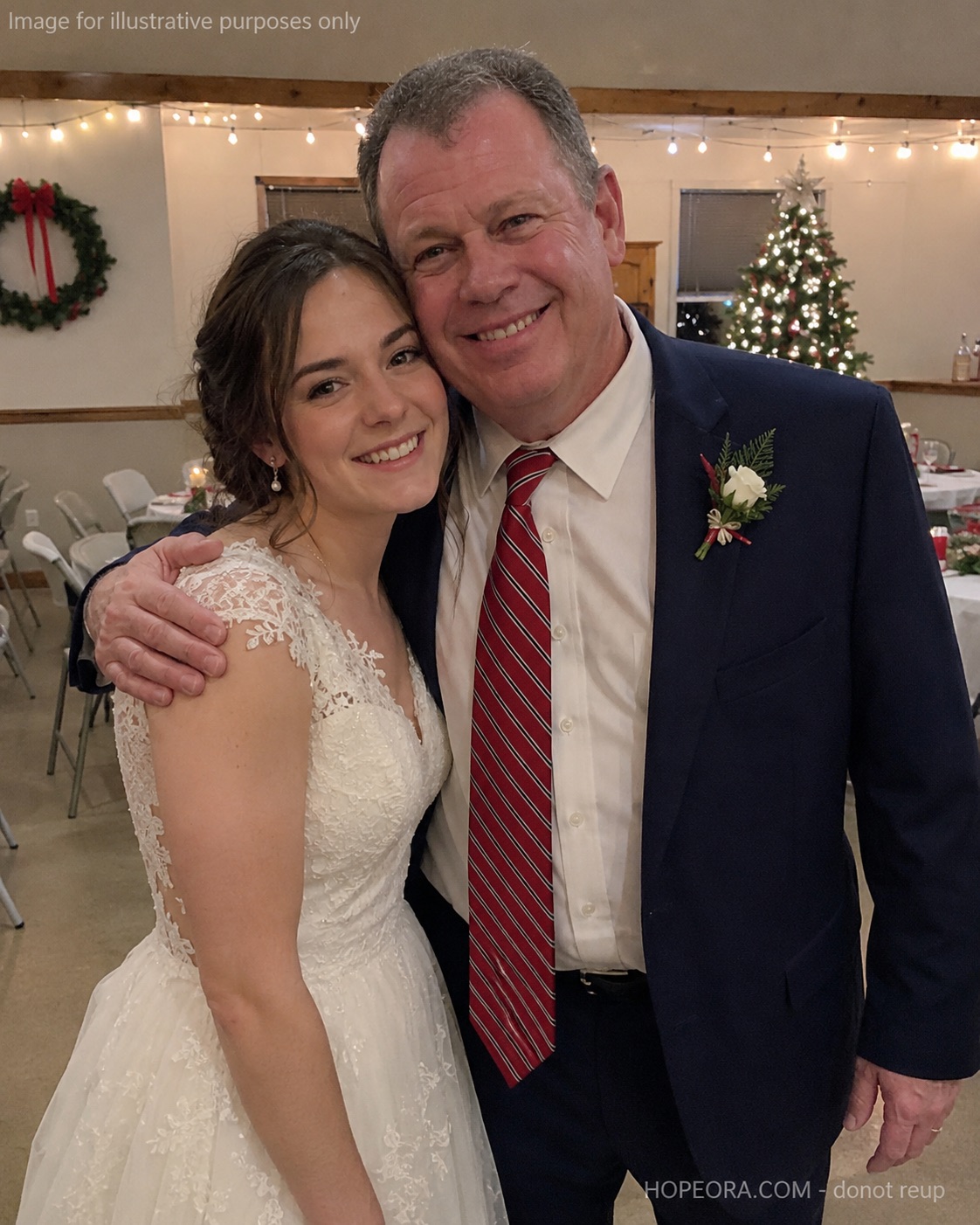
There are moments in life that make you question everything you thought you knew about love, family, and the people closest to you. For me, that moment arrived beneath the soft glow of wedding lights, surrounded by smiling guests who believed they were witnessing the beginning of a beautiful future.
Instead, they were about to watch an entire life unravel.
People often say weddings bring families together. Mine did the opposite. It exposed old wounds that had never fully healed, forced long-hidden truths into the open, and revealed just how dangerous a charming smile can be when it’s hiding something darker beneath the surface.
Even now, when I look back on that day, I remember the little details more vividly than the big ones. The scent of eucalyptus drifting through the reception hall. Crystal glasses catching candlelight. A jazz trio playing quietly in the corner while guests laughed over champagne.
Everything looked perfect.
So perfect, in fact, that no one could have guessed how close we were to disaster.
The hardest part wasn’t watching my daughter walk down the aisle.
It wasn’t seeing the man waiting for her at the altar.
It wasn’t even hearing him promise to love and cherish her for the rest of their lives.
The hardest part came later, when my son quietly pulled me away from the celebration and placed a phone in my hands.
One look at the documents on that screen changed everything I believed about the man we had welcomed into our lives.
But none of it makes sense without understanding how we arrived at that impossible day.
Sometimes the most unbelievable stories don’t begin with betrayal.
They begin with expectations.
A Marriage Built on Expectations
I married my first husband, Mark, when I was only twenty years old.
People often assume young marriages begin with reckless passion or whirlwind romance. Ours began with something much quieter—and far more powerful.
Expectation.
Our families had known one another for decades. They vacationed together every summer, attended charity galas every winter, and belonged to the same exclusive clubs where everyone seemed to know everyone else’s business before breakfast.
Our parents served on nonprofit boards together. They exchanged elegant Christmas cards featuring perfectly posed family portraits. They celebrated anniversaries together, donated to the same causes, and quietly imagined that one day their children would continue the tradition.
By the time Mark and I were old enough to understand what was happening, much of our future had already been outlined for us.
Looking back now, I sometimes think we spent more time fulfilling everyone else’s expectations than discovering who we really were.
Neither of us questioned the path.
Why would we?
To us, it seemed normal.
We attended the same social functions, smiled through the same introductions, and gradually became “the couple” long before either of us truly understood what marriage required.
When Mark proposed, no one acted surprised.
Our engagement felt less like an unexpected announcement and more like the final piece of a puzzle everyone else had already assembled.
My mother selected my wedding dress—a breathtaking designer gown with intricate lace that everyone admired.
“It suits you perfectly,” she kept saying.
Maybe it did.
But I sometimes wondered whether anyone had stopped to ask what I wanted.
At twenty, though, I wasn’t brave enough to ask myself that question either.
The wedding was elegant.
Fresh flowers lined the aisle. A string quartet played throughout the ceremony. Every place setting matched perfectly, every speech was carefully prepared, and every photograph captured what appeared to be two young people stepping confidently into a beautiful future.
From the outside, we looked like the picture of success.
Inside, we were simply doing what we believed good sons and daughters were supposed to do.
For a while, it seemed enough.
The same year we married, our daughter Rowan was born.
Holding her for the first time changed me in ways I still struggle to describe. Suddenly, all the carefully planned milestones that had guided my own life became less important than the tiny baby sleeping peacefully in my arms.
Two years later, our son Caleb completed our little family.
Our home quickly filled with toys, bedtime stories, school projects, scraped knees, and endless loads of laundry.
The years passed faster than I ever imagined they could.
Christmas mornings blurred into birthday parties.
School recitals became soccer games.
Family vacations became traditions.
Like many families in our social circle, we hired professional photographers every holiday season.
Every Christmas card showed smiling faces standing in front of fireplaces decorated with matching stockings.
Every family portrait captured polished smiles.
Neighbors complimented our beautiful home with its manicured lawn and carefully landscaped flower beds.
Friends admired the dinner parties we hosted.
People often told us how lucky we were.
I smiled politely every time.
Because the truth was much harder to explain.
The Silence That Slowly Changed Everything
Mark and I rarely fought.
Most people would probably see that as a sign of a healthy marriage.
It wasn’t.
Silence can be far more destructive than shouting.
Arguments, at least, acknowledge that something is wrong.
Silence lets problems settle quietly into every corner of a relationship until they become part of the furniture.
We had both grown up believing that respectable people didn’t air disagreements in public.
Eventually, we stopped expressing them in private too.
Whenever disappointment appeared, we buried it beneath busy schedules.
Whenever resentment surfaced, we convinced ourselves it would disappear on its own.
It never did.
Looking back now, I realize we were two emotionally inexperienced adults trying desperately to maintain an image we had inherited instead of a marriage we had intentionally built.
Neither of us knew how to admit unhappiness without feeling as though we were disappointing generations of family expectations.
We had mastered politeness.
We had never learned vulnerability.
Our conversations gradually shifted from dreams and hopes to calendars and obligations.
Who was picking up the kids?
What time did the fundraiser begin?
Which family was hosting Thanksgiving?
Who needed to RSVP?
Somewhere along the way, practical discussions replaced meaningful ones.
We weren’t angry.
We were simply… absent.
It happened so slowly that neither of us noticed.
There wasn’t one dramatic event that changed everything.
There was no betrayal.
No explosive argument.
No single moment when either of us decided to stop loving the other.
Instead, we became roommates who happened to share children, responsibilities, and a beautifully decorated house.
Years passed that way.
From the outside, we remained the couple everyone admired.
Inside our home, we lived carefully around one another, polite enough to avoid conflict but distant enough to avoid intimacy.
Even our children sensed it before we admitted it ourselves.
Rowan became fiercely independent at a young age, tackling every challenge as though she needed to prove she could rely only on herself.
Caleb, on the other hand, quietly observed everything.
He wasn’t withdrawn.
He simply listened more than he spoke.
Sometimes I’d catch him watching Mark and me across the dinner table with an expression that felt far older than his years.
Children notice the things adults think they’re hiding.
Eventually, after seventeen years of marriage, there was nothing left to pretend.
When we finally divorced, people expected fireworks.
Instead, there was only exhaustion.
The legal process moved surprisingly smoothly.
No courtroom drama.
No vicious custody battles.
No ugly accusations.
Our parents were devastated.
Divorce simply wasn’t something respectable families were supposed to do.
Privately, though, Mark and I experienced something unexpected.
Relief.
For the first time in years, neither of us had to keep performing a version of happiness that no longer existed.
The marriage hadn’t ended because we hated each other.
It ended because we’d forgotten how to truly know each other.
We remained committed parents to Rowan and Caleb, and over time we settled into a respectful rhythm that worked for all of us.
Life became quieter.
Simpler.
I assumed that chapter of my life had finally closed.
I couldn’t have known that only five years later, another man would walk into my life and, without my realizing it, quietly set in motion the chain of events that would one day bring my entire family to the brink of collapse.
A Second Chance That Felt Different
Five years passed before I met Arthur.
By then, life had settled into a comfortable rhythm. Rowan had graduated from college and was already proving herself to be every bit as determined as she had been as a child. Caleb was finding his own path, quietly building a future with the same thoughtful approach he brought to everything else.
As for me, I had finally grown comfortable with being alone.
It wasn’t loneliness.
It was peace.
For the first time in my adult life, my decisions belonged entirely to me. I decorated my home because I liked it, not because it would impress guests. I spent weekends reading novels on the patio instead of attending charity luncheons out of obligation. I learned that quiet could be comforting instead of empty.
Friends occasionally encouraged me to date again.
“You’ve still got plenty of life ahead of you,” one of them insisted over lunch.
I always smiled and changed the subject.
The truth was, I wasn’t looking for another relationship. After seventeen years in one marriage and the emotional weight that came with ending it, I had become cautious. I wasn’t interested in grand romances or whirlwind courtships.
Then Arthur appeared when I least expected him.
We met through mutual friends at a neighborhood fundraiser for the local high school. Unlike so many people I had known throughout my life, Arthur didn’t seem interested in appearances. While everyone else mingled with donors and posed for photographs, he stood off to one side discussing classic Mustangs with another teacher.
There was something refreshing about that.
Later that evening, we were introduced.
He wasn’t flashy.
He wasn’t loud.
He didn’t try too hard.
Instead, he asked thoughtful questions and actually listened to the answers.
He was thirty-eight, taught English at the local high school, and somehow managed to speak about poetry with the same enthusiasm other people reserved for sports.
He had three children from a previous marriage and spoke about them with genuine affection.
“They’re exhausting,” he joked with a grin, “but they’re the best part of my life.”
I laughed because it sounded honest.
Not rehearsed.
Not polished.
Honest.
That honesty drew me in.
Over the following weeks we met for coffee, then dinner, then long walks through the botanical gardens where conversations seemed to stretch effortlessly for hours.
We talked about everything.
Failed dreams.
Second chances.
The strange experience of dating in middle age.
The guilt divorced parents sometimes carried, even years after everything had settled.
For the first time since my divorce, I felt completely seen.
Arthur never seemed interested in the polished version of me that society expected.
Instead, he wanted to know what made me laugh, what frightened me, what books I returned to when life became difficult.
No one had asked me those questions in years.
Perhaps ever.
It felt intoxicating.
Looking back now, I understand how vulnerable I was.
Not weak.
Simply ready to believe that life still held unexpected happiness.
Arthur arrived at exactly the moment when I had lowered every emotional defense I’d spent years carefully constructing.
It wasn’t difficult to fall in love.
In fact, it happened so naturally that I barely noticed it happening at all.
Our children met.
His children were polite.
Mine seemed cautiously optimistic.
Mark even wished us well when he heard I was dating someone seriously.
Everything appeared to be falling into place.
When Arthur proposed, I didn’t hesitate for long.
Some friends thought we were moving quickly.
Perhaps they were right.
But after years spent in a marriage built on obligation rather than genuine connection, certainty felt exhilarating.
We married in a small ceremony attended only by close family and friends.
There were no lavish receptions.
No society columns.
No expectations.
Just laughter, simple vows, and the hope that two people who had already experienced heartbreak could finally build something lasting.
For a little while, I believed we had.
The Marriage That Quietly Fell Apart
The cracks appeared so gradually that I almost convinced myself they weren’t there.
Arthur didn’t change overnight.
Instead, little things began disappearing.
Our Friday evening dinners became occasional takeout meals.
Weekend drives in his beloved classic car became excuses about being too busy.
The long conversations that had once stretched late into the night slowly grew shorter.
Sometimes he seemed distracted.
Other times, simply unavailable.
Whenever I asked whether something was bothering him, he smiled reassuringly.
“I’m just tired.”
“It’s work.”
“I’m dealing with a few things.”
None of those explanations sounded unreasonable.
Life becomes busy.
People become stressed.
Marriage isn’t effortless.
So I kept giving him the benefit of the doubt.
Still, something felt different.
Not dramatically different.
Just…
Colder.
He stopped talking about future vacations.
He stopped suggesting improvements to the house we’d once discussed excitedly.
Even ordinary evenings changed.
Instead of sitting together after dinner, he’d retreat to another room with paperwork or disappear into the garage to tinker with one of his projects.
The distance between us wasn’t loud.
It was subtle.
Like watching someone slowly drift farther away across a calm lake.
You don’t notice the separation until they’re suddenly much farther than you realized.
I questioned myself constantly.
Maybe blending two families had been harder than either of us admitted.
Maybe we had rushed into marriage.
Maybe this was simply what second marriages looked like after the honeymoon faded.
Every explanation seemed more believable than wondering whether Arthur himself had changed.
Or whether I had never truly known him at all.
One evening I suggested we spend an entire weekend away together.
“No kids,” I said with a hopeful smile. “No responsibilities. Just us.”
He barely looked up from his laptop.
“Maybe another time.”
There was nothing cruel in his voice.
Nothing angry.
Just indifference.
That hurt more than I cared to admit.
Within six months, the marriage had become little more than two people occupying the same space.
We weren’t shouting.
We weren’t accusing each other.
We simply weren’t living together in any meaningful sense.
Finally, Arthur sat across from me at the kitchen table one rainy evening.
The silence before he spoke lasted so long that I already knew what was coming.
“I don’t think this is working.”
His words landed gently.
Almost kindly.
Oddly enough, I felt relief before sadness.
Not because I wanted the marriage to end.
Because I had grown exhausted pretending everything was fine.
We talked calmly.
There were no tears.
No broken dishes.
No dramatic exits.
By the end of the evening, we had agreed to separate.
Friends searched for scandal.
There wasn’t any.
Family members quietly wondered whether we’d argued about money or infidelity.
Neither explanation fit.
Whenever anyone asked, I simply said the marriage had run its course.
“It was mutual.”
I repeated those words so many times that eventually I believed them myself.
Arthur wished me happiness.
I wished him the same.
We divided our belongings with remarkable civility and moved on.
Or at least I thought we had.
I tucked that brief marriage away like a chapter that had ended before the story truly began.
Never once did I imagine Arthur would reappear.
Certainly not in the way he eventually did.
The Conversation That Changed Everything
Nearly two years passed before Rowan called and asked if she could come over.
Her voice sounded unusually excited.
“I have something important to tell you.”
Every mother recognizes that tone.
It usually means life is about to change.
She arrived carrying a bottle of wine and wearing a smile so bright it seemed impossible not to return it.
For a while we talked about ordinary things.
Her demanding job at the marketing firm.
A difficult client.
Plans for an upcoming business conference.
She had always been ambitious, even as a little girl.
When other children played pretend, Rowan organized neighborhood talent shows, assigned everyone responsibilities, and somehow convinced adults to help.
She liked direction.
She liked certainty.
Most of all, she liked believing she was in control of her future.
Watching her become successful hadn’t surprised me in the slightest.
Eventually she grew unusually quiet.
Then she reached across the table and took my hand.
“Mom,” she said softly, her cheeks beginning to flush, “I’m in love.”
The warmth in her voice made me smile before I even realized I was doing it.
“Oh?” I teased. “You’ve been keeping secrets.”
She laughed nervously.
“I wasn’t ready to tell anyone.”
“Well,” I said, squeezing her hand, “who is he?”
Her smile widened.
The kind of smile that only appears when someone believes they’ve found exactly what they’ve been searching for.
She took a slow breath.
“It’s Arthur.”
For a moment I honestly thought I’d misunderstood.
The room seemed strangely still.
“Arthur… who?”
Even as the words left my mouth, I already knew the answer.
She lowered her eyes for only a second before meeting mine again.
“Your Arthur.”
Every sound around me seemed to disappear.
The ticking kitchen clock.
The traffic outside.
Even my own breathing.
I stared at her, unable to process what I’d just heard.
“My Arthur?” I whispered.
She nodded.
“It just… happened.”
She laughed softly, almost shyly.
“He reached out after you two split up. We started talking. At first it was nothing serious. We had conversations about books, work, life…” She smiled to herself. “He always understood me, Mom. More than anyone else.”
Her words blurred together.
I heard them.
I simply couldn’t absorb them.
Arthur.
The man who had once been my husband.
The man sixteen years older than my daughter.
The man I believed had disappeared from our lives forever.
Every instinct inside me screamed that something was terribly wrong.
Before I could gather my thoughts, Rowan reached across the table again, her expression becoming unexpectedly firm.
“I know what you’re thinking,” she said. “But I love him.”
I opened my mouth.
No words came.
She drew a slow breath and looked directly into my eyes.
“And if you can’t accept that…” Her voice trembled slightly, but her resolve didn’t. “Then I’ll have to step away from this relationship with you. I won’t let anyone destroy what we’ve built together.”
The words struck harder than I ever expected.
My daughter.
My little girl.
Giving me an impossible choice.
I looked at the hope shining in her eyes and realized that if I pushed too hard, I might lose her completely.
So I swallowed every fear rising inside me.
Every question.
Every memory.
Every instinct warning me that something wasn’t right.
Then I forced myself to smile.
“If he makes you happy,” I said quietly, “then… I’ll support you.”
The relief that washed across her face was immediate.
She threw her arms around me, thanking me over and over again.
I hugged her tightly.
But as I held my daughter, a knot formed deep inside my stomach.
No matter how convincing my smile appeared, something in my heart refused to believe that this story would have a happy ending.
A Wedding Filled With Quiet Dread
The months leading up to the wedding passed in a strange emotional fog.
On the surface, I did everything a supportive mother was supposed to do.
I accompanied Rowan to dress fittings.
I sampled cake flavors.
I admired floral arrangements and listened patiently as she debated invitations, centerpieces, and seating charts.
Whenever she excitedly held up another bridal magazine or scrolled through photographs of reception venues, I smiled.
At least, I hoped it looked like a smile.
Inside, I wrestled with a constant sense of unease that refused to disappear.
It wasn’t jealousy.
People often assume that must have been my motivation, but it wasn’t.
By then, Arthur was firmly in my past.
I didn’t miss our marriage.
I didn’t wish he’d come back.
What haunted me wasn’t losing him.
It was the feeling that I had never truly known him.
There had always been something I couldn’t explain.
Something hidden behind his calm demeanor.
Whenever Rowan talked about how attentive he was or how deeply he understood her, I found myself remembering the early days of our own relationship.
He had said many of the same things to me.
He had asked the same thoughtful questions.
He had made me feel uniquely understood.
At first, I convinced myself that perhaps he simply loved differently now.
People mature.
They learn from failed relationships.
Maybe I had caught him during a difficult season of life.
Maybe Rowan was receiving the better version of him.
I wanted desperately to believe that.
Because the alternative was unbearable.
Mark noticed my discomfort long before anyone else did.
One afternoon, after a family planning lunch, he lingered behind while everyone else left.
“You don’t have to pretend with me,” he said quietly.
I looked at him in surprise.
“I don’t know what you mean.”
He offered the small, understanding smile that had replaced so many of our old conversations after the divorce.
“Yes, you do.”
Neither of us spoke for a moment.
Finally, I admitted the truth.
“I have a bad feeling.”
“About Arthur?”
I nodded.
“I can’t explain it.”
Mark folded his arms thoughtfully.
“If you have evidence, tell Rowan.”
“I don’t.”
“And without evidence?”
I looked away.
“She’ll think I’m trying to sabotage her happiness.”
He sighed.
“I know.”
Neither of us liked the situation.
But we also knew Rowan well enough to understand that pushing harder would only push her farther away.
She had inherited the stubborn streak that once made me proud when she was a little girl.
Now it terrified me.
So we waited.
And prayed our instincts were wrong.
As the wedding approached, Rowan became even more radiant.
She talked excitedly about the honeymoon.
About buying a home together.
About building a future.
Listening to her was bittersweet.
She wasn’t pretending.
She genuinely believed she had found the love of her life.
Every joyful smile she gave Arthur made it harder for me to voice the fears I couldn’t prove.
So I stayed silent.
It remains one of the hardest decisions I’ve ever made.
Not because silence felt right.
Because I couldn’t see another path that wouldn’t cost me my daughter.
Then the wedding day arrived.
The venue looked like something from a magazine spread.
Elegant eucalyptus garlands draped across wooden beams.
Hundreds of candles cast a soft golden glow throughout the reception hall.
Fresh white roses filled crystal vases.
A jazz trio played familiar standards that drifted gently through the room without overpowering conversation.
Guests admired every carefully chosen detail.
Family friends embraced one another.
Champagne glasses clinked in celebration.
Everything appeared effortless.
Perfect.
When Rowan stepped into the aisle wearing her ivory gown, conversations stopped instantly.
She looked breathtaking.
Not because of the dress, although it was beautiful.
She glowed with complete confidence.
With complete trust.
Watching her smile at Arthur broke my heart in ways I still struggle to explain.
I wanted that smile to last forever.
I simply wasn’t convinced it would.
The ceremony passed in a blur.
They exchanged vows.
They exchanged rings.
Friends applauded.
Photographers captured every embrace and every joyful tear.
I stood beside them for photographs, smiling on cue while my stomach twisted tighter with every passing minute.
No one noticed.
Or perhaps everyone simply saw what they expected to see.
A Son Who Refused to Ignore His Instincts
The reception had just begun when Caleb approached me.
Unlike his sister, Caleb had always been difficult to read.
He wasn’t unemotional.
He simply believed emotions deserved careful handling.
As a child, he had been the one who quietly comforted classmates after disappointments instead of drawing attention to himself.
As an adult, that steadiness had only deepened.
At twenty-two, he had already built a promising technology startup, yet he remained remarkably grounded.
Success hadn’t made him arrogant.
If anything, it had made him even more thoughtful.
So when he placed a firm hand on my arm and said, “Mom, we need to talk,” I immediately knew something was wrong.
He wasn’t the type to interrupt a wedding over something trivial.
I followed him without asking another question.
He led me outside into the parking lot, where the sounds of music and laughter faded behind the closed doors.
The evening air felt cool against my skin.
For several moments, neither of us spoke.
Then Caleb unlocked his phone and began opening a series of folders.
“I waited until today because I wanted facts,” he said quietly.
“I don’t understand.”
“I hired a private investigator.”
I stared at him.
“You what?”
“I couldn’t shake the feeling that Arthur wasn’t telling the truth.”
His voice remained calm, but I could hear months of frustration beneath every word.
“The investigator finally sent everything a few minutes ago.”
He handed me the phone.
At first, I didn’t fully understand what I was seeing.
Legal filings.
Court records.
Financial documents.
Investigative summaries.
Page after page.
Each one painted a picture that looked nothing like the man Arthur claimed to be.
He had filed for bankruptcy years before meeting me.
Multiple business loans had gone into default.
Credit accounts had been sent to collections.
Back taxes remained unpaid.
There were court documents involving his former wife.
Missed alimony payments.
Hidden assets.
Financial disputes that stretched back years.
Each page added another piece to a puzzle I hadn’t realized existed.
My hands began to shake.
“This… this can’t be.”
“It is.”
Caleb’s expression hardened.
“I verified everything through multiple sources.”
I remembered something Arthur had once said before our wedding.
He had laughed awkwardly when I insisted on a prenuptial agreement.
“Do we really need this?”
“It isn’t about trust,” I’d told him.
“It’s about protecting both of us.”
He had eventually signed.
But afterward, something subtle shifted between us.
At the time, I’d blamed myself for being overly cautious.
Now the memory landed very differently.
Caleb gently took the phone back.
“Mom,” he said, “he targets financially secure women.”
The words settled heavily between us.
“He couldn’t get access to your assets because of the prenup.”
I slowly closed my eyes.
Suddenly, our brief marriage made painful sense.
The emotional distance.
The sudden withdrawal.
The quiet ending.
It hadn’t been confusion.
It hadn’t been incompatibility.
It had been disappointment.
Not mine.
His.
When he realized I wasn’t the opportunity he expected, he simply moved on.
And somehow…
He had moved on to my daughter.
The realization made my stomach turn.
“We have to tell Rowan.”
I nodded automatically.
Then immediately shook my head.
“No.”
Caleb frowned.
“What do you mean?”
“If we confront her privately, she’ll believe him instead of us.”
I knew my daughter.
Love has a remarkable way of making intelligent people defend impossible things.
Especially when they’ve invested their entire future in believing them.
Caleb looked back toward the reception hall.
“So what do we do?”
I took one slow breath.
“If Arthur has survived by hiding the truth…”
I looked directly at my son.
“…then we stop letting him hide.”
The Moment Everything Changed
When we walked back inside, the celebration continued as though nothing had happened.
Guests laughed over dinner.
Children danced near the stage.
Someone proposed another champagne toast.
Arthur sat beside Rowan, smiling comfortably as relatives congratulated them.
He looked entirely at ease.
Caleb squeezed my shoulder once before walking toward the stage.
The emcee welcomed him warmly.
“Our groom’s stepson would like to say a few words.”
Several guests chuckled politely.
Caleb accepted the microphone.
For a moment he simply looked around the room.
Then he smiled.
“I’d like to congratulate my sister.”
Everyone applauded.
“And Arthur.”
More applause.
He paused.
“I’ve known Arthur in several different roles over the years.”
A few guests laughed softly.
Rowan smiled proudly.
Arthur smiled too.
But only for a moment.
“I’ve been thinking today about what makes a marriage successful.”
Caleb’s voice remained calm.
“Trust.”
Another pause.
“Honesty.”
The room gradually grew quieter.
“And because honesty is so important, I’d like to ask Arthur a question.”
Arthur shifted slightly in his chair.
“How is your former wife doing these days?”
Silence.
“Is she still waiting for the alimony payments you owe her?”
The room froze.
Nervous laughter quickly disappeared.
Arthur’s face drained of color.
Caleb continued before anyone could interrupt.
“Or perhaps you’re still occupied with the lawsuits.”
He raised his phone.
“The bankruptcy?”
Another pause.
“The unpaid debts?”
No one moved.
No one spoke.
The only sound came from the air conditioning humming softly overhead.
Caleb turned his phone so nearby guests could see the court documents displayed on the screen.
“These aren’t rumors.”
His voice never rose.
“They’re public records.”
Arthur finally stood.
“I can explain.”
Caleb looked directly at him.
“When?”
Another silence.
“After the honeymoon?”
Arthur swallowed.
“This isn’t the place.”
“No,” Caleb replied calmly.
“It became the place the moment you asked my sister to marry you without telling her the truth.”
He turned toward Rowan.
“You didn’t know.”
His voice softened for the first time.
“I know you didn’t.”
Then he looked back at Arthur.
“You tried something similar with Mom.”
My heart pounded so loudly I barely heard the next words.
“But when you realized you couldn’t manipulate her finances because of the prenup, you walked away.”
Every eye in the room shifted toward Arthur.
Finally, Rowan rose slowly from her chair.
She looked first at Caleb.
Then at me.
Then at Arthur.
Her hands trembled.
“Is it true?”
Arthur hesitated.
Only for a second.
But sometimes a single second says everything.
“It’s… complicated.”
Rowan stared at him.
Then quietly shook her head.
“No.”
Tears filled her eyes.
“It isn’t.”
She looked toward me.
Our eyes met across the crowded room.
For a heartbeat neither of us moved.
Then she crossed the room and collapsed into my arms.
“Mom…”
Her voice cracked.
“Oh, Mom…”
I held her as tightly as I had when she was a frightened little girl.
Only this time, I couldn’t protect her from heartbreak.
I could only help her walk through it.
Guests began quietly gathering their belongings.
The celebration dissolved into whispered conversations and stunned expressions.
Arthur tried to move toward us.
No one followed him.
Within an hour, the reception hall stood nearly empty.
The wedding was over almost as quickly as it had begun.
By the following morning, Rowan had met with an attorney.
After reviewing the evidence, she filed for an annulment, citing fraud and material misrepresentation. Because the marriage had barely begun and the legal process moved swiftly, the relationship ended before it truly had the chance to become a permanent chapter of her life.
She moved back into my home for a while.
Not because she needed someone to solve her problems.
Because she needed a place where she could finally stop pretending she was fine.
Those first weeks were quiet.
Some evenings we simply sat together with cups of tea, saying very little.
Other nights we talked for hours.
About my divorce from Mark.
About Arthur.
About expectations.
About how easily intelligent people can mistake attention for genuine love when they’re longing to feel understood.
One afternoon she asked a question I’d never expected to hear.
“Did you love him?”
I thought carefully before answering.
“I loved the man I believed he was.”
She nodded.
“So did I.”
We shared a small, fragile laugh.
It wasn’t happiness.
Not yet.
It was recognition.
Healing rarely begins with grand gestures.
Sometimes it begins with two people finally telling each other the truth.
Over the months that followed, I watched Rowan slowly rebuild her confidence. She started therapy, determined to understand not only how Arthur had deceived her but also why she had ignored the warning signs. She eventually rented her own apartment again and even took a solo trip to Colorado—a journey she later described as the first time she’d felt completely free in years.
One evening, after returning from that trip, she sat across from me at the kitchen table, smiling in a way I hadn’t seen since before Arthur entered our lives.
“I don’t know exactly what comes next,” she admitted, wrapping both hands around her coffee mug. “But I finally know who I am again.”
I reached across the table and squeezed her hand.
“You never stopped knowing,” I said gently. “You just lost sight of yourself for a little while.”
She smiled through tears.
“So did you.”
She was right.
For years, I believed my brief marriage to Arthur had simply failed because we had rushed into it. Caleb’s determination uncovered the truth that I never could have found on my own. The prenuptial agreement I had insisted upon hadn’t just protected my finances—it had unknowingly protected my future. When Arthur realized he couldn’t gain what he wanted from me, he searched for another opportunity, believing my daughter would be easier to manipulate.
That realization was painful.
But it also brought clarity.
Arthur hadn’t destroyed our family.
He had revealed its greatest strength.
My son trusted his instincts enough to seek evidence instead of relying on suspicion. He risked being misunderstood because protecting his sister mattered more than avoiding an uncomfortable confrontation. His courage changed all of our lives.
We never saw Arthur again.
There were no apologies.
No dramatic attempts to explain.
Perhaps he understood there was nothing left to salvage once the truth stood in the light for everyone to see.
Today, our family gatherings look different than they once did. They aren’t perfect, and we no longer try to make them appear that way. We’ve learned that honesty is far more valuable than appearances, and that love isn’t measured by how flawless a family looks from the outside, but by how fiercely its members protect one another when life falls apart.
If there’s one lesson I carry from that extraordinary chapter of my life, it’s this: trust should never require blindness, and real love never asks you to ignore your instincts. Sometimes the people who save us aren’t the ones standing at the altar promising forever. Sometimes they’re the ones quietly standing beside us, willing to speak the truth when everyone else is applauding.
And for that, I will always be grateful to my son—and to the family we found again after nearly losing our way.