At 22, they were told marriage was beyond their abilities. Decades later, Paul and his wife have built a lasting partnership grounded in shared responsibility, resilience, and the everyday choice to keep choosing each other.
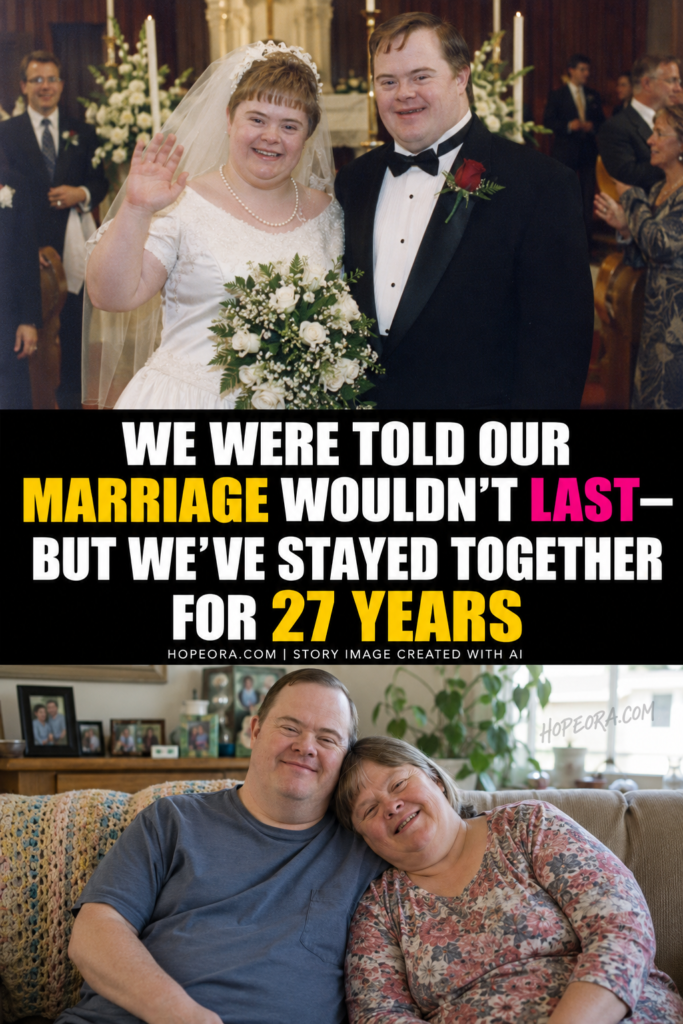
When she was 22 years old, people told her she was making a mistake.
She and Paul had decided they wanted to get married, but instead of congratulations, they were often met with doubt. Because they both have Down syndrome, many people questioned whether they could handle the realities of married life.
Some worried about practical responsibilities.
Others questioned whether they could manage a household, keep up with appointments, or make important decisions together.
A few went even further.
Some predicted their marriage would not survive its first year.
Those opinions were difficult to ignore, but they were never enough to change their minds.
They got married anyway.
The wedding marked the beginning of a life they would build together—not because anyone promised it would be easy, but because they wanted to share that journey.
Like many newly married couples, they did not begin with every answer.
Instead, they learned as they went.
They discovered how to cook meals together, gradually turning everyday tasks into familiar routines. They learned to organize appointments, manage the responsibilities that come with running a household, and support one another through the countless details that make up ordinary life.
Those skills did not appear overnight.
They were developed one day at a time, through patience, practice, and the willingness to keep learning together.
For them, marriage was never about proving they already knew everything.
It was about growing alongside each other.
Over the years, their partnership has also been shaped by health challenges.
Paul lives with diabetes.
His wife has experienced health issues of her own.
Neither of them pretends those experiences have been simple. Medical appointments, changing circumstances, and difficult days have become part of their shared story, just as they do for many couples over the course of a long marriage.
What has remained constant is the way they have approached those moments.
As a team.
When one person needed support, the other was there.
When circumstances became difficult, they faced them together rather than separately.
That commitment has become one of the defining qualities of their relationship.
Their marriage is not measured by the absence of hardship.
It is measured by the way they continue moving through life side by side.
The years have been filled with ordinary moments that rarely attract attention but often carry the greatest meaning.
Preparing meals.
Keeping track of appointments.
Sharing conversations.
Looking after each other.
Celebrating the good days.
Finding strength during the difficult ones.
Building routines that transform a house into a home.
These moments may seem small in isolation, but together they form the rhythm of a shared life.
Over time, the predictions that once surrounded their relationship quietly faded into the background.
Not because anyone officially admitted they had been wrong, but because each passing year became its own answer.
One anniversary followed another.
Then another.
Eventually, they reached twenty-five years of marriage.
To mark that milestone, they renewed their vows.
The decision was not driven by a desire to respond to critics or rewrite old conversations.
They did it for a much simpler reason.
After twenty-five years, they still wanted to choose each other.
Renewing their vows was not about beginning again.
It was about recognizing everything they had already built.
The challenges they had faced.
The routines they had created.
The life they had shared.
The promises they had continued to keep long after their wedding day.
Now, twenty-seven years after saying “I do,” their story stands as a quiet reminder that lasting relationships are rarely defined by other people’s expectations.
Every marriage encounters seasons of change.
Every couple learns, adapts, and grows over time.
For Paul and his wife, that process unfolded in much the same way it does for countless other families—through shared responsibilities, mutual care, and the daily decision to remain committed to one another.
Looking back, she remembers the voices that questioned whether they could manage adulthood together.
People wondered whether they would understand bills.
Whether they could handle responsibility.
Whether they could sustain a lifelong relationship.
Those questions once seemed to overshadow every conversation about their future.
Today, their answers are not found in arguments.
They are found in the life they have lived.
A home built together.
Responsibilities shared.
Health challenges faced together.
Ordinary days appreciated.
Milestones celebrated.
A marriage that has endured through nearly three decades of everyday life.
The greatest moments of their relationship have not necessarily been dramatic.
They have been found in the ordinary choices repeated over thousands of days—the quiet acts of care that often define the strongest partnerships.
Looking after one another.
Showing up.
Sharing responsibilities.
Finding joy in familiar routines.
Continuing to learn together.
Those choices have carried them much farther than many people expected.
When they exchanged vows for the first time, few believed their marriage would last.
Twenty-seven years later, they are no longer measuring their success against those early predictions.
They are simply living the life they created together.
A real home.
A real partnership.
A real marriage.
And after all these years, they are still choosing each other.
Reader Invitation: What do you think is the most important quality that helps a marriage grow stronger over the years?