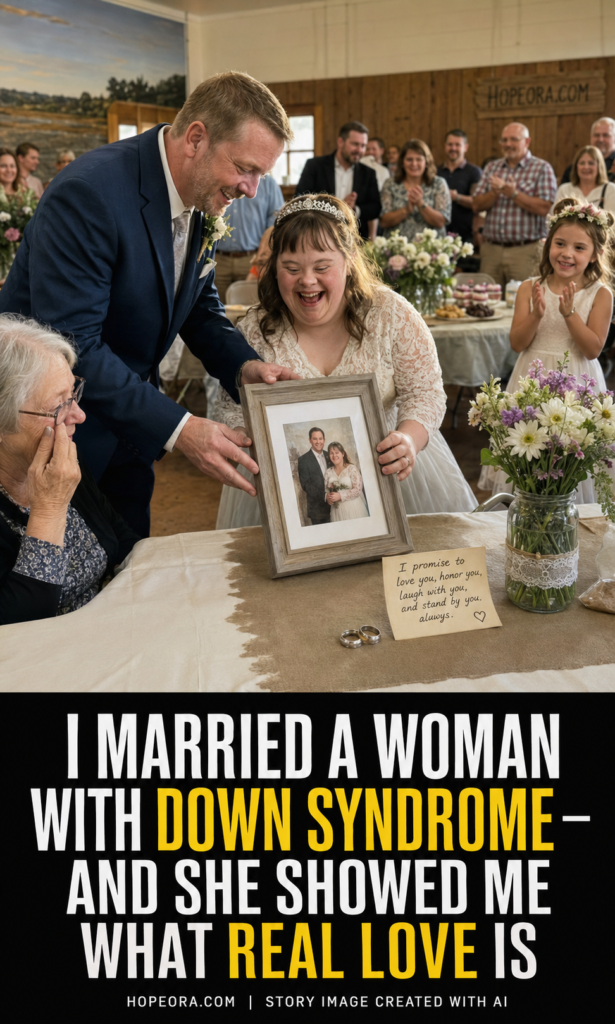
A man carrying the weight of heartbreak meets a woman whose honesty and steady routines reshape his life. When her father questions whether he’ll stay, he answers not with words alone, but with everyday commitment.
“Men like you don’t stay.”
Susan’s father said those words the very first night I stood at their front door. There wasn’t anger in his voice as much as caution—the kind that comes from wanting to protect someone you love. He looked me in the eye and wanted to know if I understood what real responsibility meant.
I answered as simply as I could.
“I’m not walking out on her.”
At the time, those were only words. I knew they wouldn’t mean much until my actions matched them. Trust, especially from parents who have spent a lifetime looking out for their daughter, isn’t handed over because someone says the right thing. It has to be earned one ordinary day at a time.
The truth is, I never expected my life to change in a cooking class.
I signed up because I needed something different. Not something dramatic—just something that would break the routine that had become my entire world. Work. Home. Sleep. Repeat. Weeks blurred together until every morning felt almost identical to the one before it.
I had come out of a long relationship that left me emotionally exhausted. The breakup didn’t just end a chapter; it quietly changed the way I looked at people. I stopped expecting much from anyone. Trust became something I avoided instead of built.
I withdrew without really noticing it.
Friends slowly disappeared from my calendar. Holidays became dates I worked through or ignored. My apartment stayed quiet. The days were filled with background noise and tired mornings that seemed to promise more of the same.
Then I met Susan.
The first thing she noticed about me wasn’t impressive.
It was my sauce.
I had managed to burn it badly enough that everyone nearby could tell something had gone wrong. Susan pointed at it, smiled, and I laughed—a genuine laugh that surprised even me. It had been a long time since something that simple had broken through everything I was carrying.
That small moment became a conversation.
Then another.
Susan has Down syndrome, but what stood out to me wasn’t a label. It was the way she moved through her life with remarkable consistency. She kept her job. She followed her routines. She maintained her apartment with steady discipline. She took pride in the responsibilities that made up her everyday life.
There was a quiet confidence in that.
She didn’t pretend to be someone she wasn’t, and she didn’t waste energy trying to impress people. What you saw was exactly who she was.
There was something refreshing about that honesty.
While I spent years guarding myself behind polite conversations and emotional distance, Susan asked direct questions. If she wanted to know something, she asked. If she cared, she showed it. There was no guessing where I stood with her.
Somehow, those straightforward conversations became the safest place I’d been in years.
She listened without trying to fix me.
She remembered the things I mentioned in passing.
She noticed when I seemed tired.
She reached for my hand before I ever thought to reach for hers.
None of those moments seemed extraordinary on their own. Together, they changed the direction of my life.
People often think relationships are built on grand gestures. My experience has been the opposite. They’re built on consistency. On deciding, over and over again, to be present.
Susan showed up for me.
So I showed up for her.
As our relationship grew, I knew it wasn’t only Susan who was getting to know me. Her parents were watching too.
I understood why.
Every parent wants to believe their child will be loved well. When your child has spent a lifetime relying on people who genuinely care, you’re naturally careful about anyone new entering that circle.
Her father wasn’t interested in promises.
He wanted proof.
He watched how I treated Susan when no celebration was happening and no audience was around. He noticed whether I was patient. Whether I respected her independence. Whether I kept my word. Whether I arrived when I said I would.
Those aren’t dramatic tests.
They’re simply the things that reveal who someone is.
Over time, I realized I wasn’t trying to convince him with speeches. I was simply living the answer to the question he’d asked me at the front door.
Could I handle real responsibility?
Responsibility, I learned, isn’t about carrying someone else’s life for them. It’s about being dependable. It’s about respecting another person’s dignity, supporting their goals, and remaining present when life settles into ordinary routines instead of exciting milestones.
That’s where commitment actually lives.
The kitchen where Susan and I first met eventually became more than a classroom.
It became part of our story.
The place where I once stood over a burnt sauce became the place where I asked her to marry me.
There wasn’t anything magical about the room itself. The magic came from everything that had happened between those two moments—from awkward introductions to shared meals, from quiet conversations to countless everyday decisions that built trust one piece at a time.
When I asked, she smiled.
Then she said yes.
In that instant, I thought back to the first evening I met her parents.
I remembered the sentence that had stayed with me.
“Men like you don’t stay.”
Maybe, years earlier, someone had given them reasons to be cautious. Maybe experience had taught them that promises can be easy while commitment is difficult. I never asked. I didn’t need to.
What mattered was that every day since then offered another opportunity to answer that concern without saying a word.
Love isn’t proven in a single conversation.
It’s proven by showing up.
Again tomorrow.
And the day after that.
Looking back, I realize Susan didn’t simply become the person I wanted to marry. She helped me become someone I barely recognized from the man who first walked into that cooking class carrying disappointment and isolation.
She reminded me that trust can be rebuilt.
That laughter can return unexpectedly.
That healing sometimes begins with something as ordinary as sharing a kitchen with someone who sees you clearly.
Our story didn’t begin with certainty.
It began with skepticism, a burnt sauce, and two people who chose to keep coming back.
Sometimes that’s all a lasting relationship really asks of us—not perfection, not flawless histories, but the willingness to remain present long after the first impression has faded.
For me, staying was never just a promise I made to Susan’s father.
It became the promise I made to Susan.
And, in many ways, the promise I finally made to myself.
Reader Invitation
Have you ever had a relationship that changed your life not through dramatic moments, but through the quiet consistency of someone who simply kept showing up?